WARC Web Archives: What Does a Website Capture Actually Preserve?
Learn what the WARC web-archive format records, what a crawl can miss, and how to cite a preserved website without overstating its completeness.
Publication & corrections: infostoa · Editorial standards
Individual author and specialist reviewer information is not provided for this article.
Saving a page is not the same as archiving a website
A printout or screenshot preserves one visible moment, but usually omits the responses, linked resources, and collection context that produced it. A web archive records resources requested and received by a crawler so they can be consulted later. WARC, short for Web ARChive, is a standardized way to package web resources alongside information about their capture. Finding a WARC file therefore does not prove that an entire website was preserved. Readers still need to ask which URLs were attempted, when collection occurred, whether requests succeeded, and which related resources were outside the crawl.
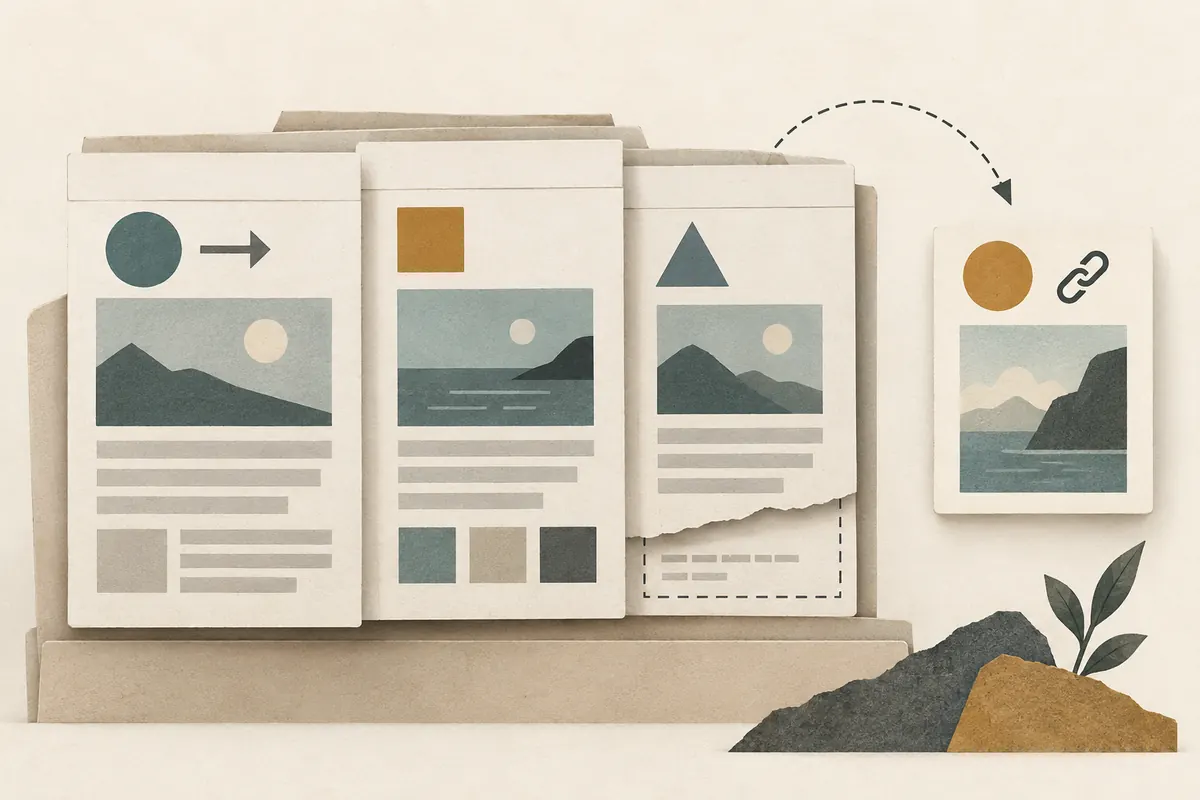
*Concept illustration only; it does not show actual WARC records or a capture result.*
What IIPC WARC Format 1.1 specifies
The IIPC WARC Format 1.1 specification specifies WARC version 1.1 record types and fields. A file may contain resource responses, request records, metadata, and references to other records, among other defined uses. Fields such as a record identifier, target URI, date, and content length help identify and relate the stored material. The standard describes how information is represented; it does not require a crawler to discover every page on a site or guarantee that a server returned the intended content. The presence of readable bytes in a WARC is consequently different from evidence that a dated website can be reconstructed in full. The specification is useful for interpreting the container, while collection logs and scope statements are needed to interpret the collection.
Why interactive and linked material may be absent
Pages available only after sign-in, results generated after a search, and content loaded later by scripts may not be found through ordinary link following. Robots rules, request limits, temporary server failures, and geographic differences can also shape what a crawler receives. A page may be present while an externally hosted video, font, or image is missing, changing the appearance of a replay. A control that changes content after a click may not work even when the initial HTML and images were saved. A replay interface assembles surviving records; it is not a recording of every state every visitor could have seen. Researchers should describe the observed capture and its gaps instead of treating a replay as a transparent window into the whole live site.
Expert perspective: preserve the crawl story with the files
The Library of Congress format description identifies WARC as a format used by archival institutions to store content harvested by web crawls and discusses properties relevant to sustainability. For a usable collection, practitioners should retain the crawl scope, seed URLs, collection dates, tools and settings, exclusions, and known errors alongside the WARC files. Crawl logs and URL inventories can show whether a missing page was never attempted or merely failed during collection. Recording checksums helps detect later changes to the stored files, although a checksum cannot show that the capture was complete, accurate, lawful to publish, or ethically appropriate. These records let a future reader assess the collection as evidence rather than infer completeness from a polished replay.
Citing and reusing a preserved page
When citing an archived page, distinguish the original URL from the archive's replay URL and state the capture date separately from the date you accessed the replay. Confirm whether a date shown on the page is a publication date or merely a timestamp added by the archive. A phrase visible in one capture does not establish that every visitor received the same version at that time. Dynamic personalization, language, location, and later edits may have produced other experiences. Preservation also does not automatically settle privacy, copyright, takedown, or community access questions. WARC supplies a structured record format; an institution still has to make and explain decisions about collection, access, retention, and reuse in the relevant context.
A practical reading checklist
Start with the collection's description and dates, then inspect the target URI and response status in the relevant records. Compare the page with its linked assets and note obvious missing elements. If the research depends on a particular interaction, test whether that action was captured and report when it cannot be reproduced. Keep a stable citation to the archived item and, where appropriate, a copy of the collection documentation. These modest steps make a claim more precise: “this capture contains this response” is often supportable where “the website showed this to everyone” is not. A web archive is valuable precisely when its evidence and its limits are both made visible.