Can UV-exposed mushrooms maintain vitamin D through winter?
UV-exposed mushrooms can provide vitamin D2, but a six-week winter randomized trial did not find that they prevented a seasonal decline in total blood 25-hydroxyvitamin D. Here is what changed, how mushroom vitamin D content varied, and what the study cannot establish.
Publication & corrections: infostoa · Editorial standards
Individual author and specialist reviewer information is not provided for this article.
UV-exposed mushrooms can contribute vitamin D2 to a diet, but eating them cannot be assumed to maintain vitamin D status through winter. In a randomized trial published in 2026, the mushroom group’s blood marker for vitamin D2 rose, but its D3 marker also fell; the decline in total 25-hydroxyvitamin D (25OHD) was not significantly different from the control group. The researchers concluded that the intervention did not offset the seasonal decline. Read the full study
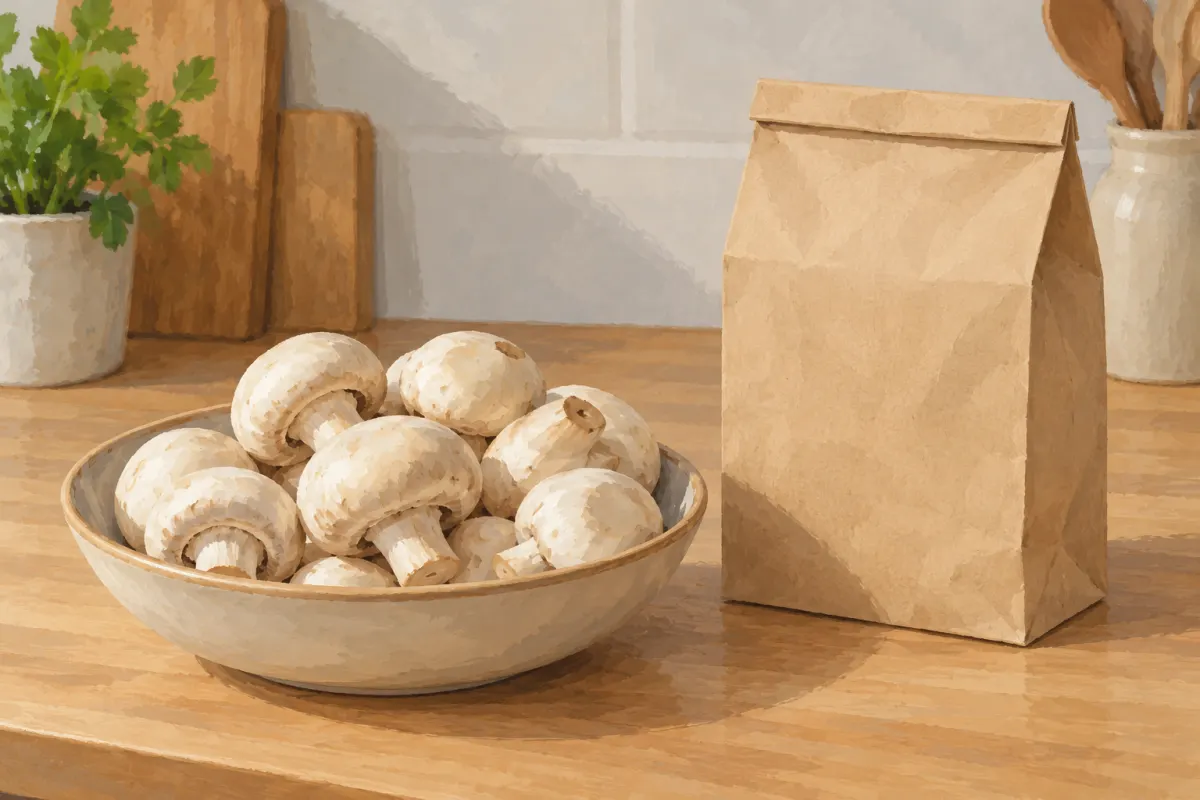
Who took part and what was tested
The six-week trial was conducted in the United States from late autumn to early spring in 2022–2023 and 2023–2024. Forty-three adults were randomized, and 41 completed the study. Participants were classified as overweight or class I obese, with a mean age of about 43 years. The mushroom group added UV-exposed button mushrooms designed to provide 800 IU of vitamin D2 per day to their usual diet; the control group consumed breadcrumbs. Fasting blood samples at baseline and week six measured 25OHD2, 25OHD3 and total 25OHD. The study was small, short and limited to a selected adult group, so it cannot represent every age or health status.
A rise in D2 did not maintain total 25OHD
In the intent-to-treat comparison, 25OHD2 increased in the mushroom group relative to control, while 25OHD3 decreased. The seasonal decline in total 25OHD, however, did not differ significantly between groups. An increase in one metabolite is not the same finding as maintaining the overall blood marker used to assess vitamin D status. The trial observed the first but did not establish the second.
The vitamin D content of the mushrooms was also variable. Only 67% of the UV-exposed mushroom samples collected weekly during the study contained vitamin D2. Although the intervention was designed around a target of 800 IU a day, that amount was not found in every sample. “Designed to provide” describes the study target; it does not guarantee that every retail product or package contains the same amount. The study does not justify applying its target to another brand without checking that product’s nutrition information. Participants ate 84 g of fresh button mushrooms twice daily, 168 g in total.
What the finding does—and does not—show
The result does not mean that UV-exposed mushrooms contain no vitamin D2 or cannot contribute to intake. Some study samples contained D2, and the mushroom group’s blood D2 marker increased. The central finding is narrower: this winter intervention did not prevent the decline in total 25OHD. It should be interpreted within the six-week period, the 41 completers and the trial’s selected adult population.
The study was not designed to measure long-term deficiency prevention, fractures, symptoms, disease outcomes or effects in other age groups. It also does not explain every reason total 25OHD changes seasonally, or establish how much variation between mushroom samples affected the result. It would overstate the evidence to say UV-exposed mushrooms prevent deficiency on their own; it would also be inaccurate to conclude that mushrooms make no contribution to vitamin D intake.
Expert context: read the package rather than assuming a dose
If a product is labeled UV-treated or vitamin D-enriched, check its own nutrition information, serving size and storage or preparation directions. The study’s target is not a measurement for every commercial product, so do not transfer that number automatically to another package. MedlinePlus explains that vitamin D comes from skin production, food and supplements, and that few foods naturally contain much vitamin D. Some foods are fortified, making the amount on the specific package useful information. MedlinePlus: Vitamin D
Whether diet alone is sufficient, or testing or a supplement is appropriate, depends on individual circumstances. This trial does not diagnose deficiency or set a supplement dose. If you are concerned about low vitamin D or considering a supplement, discuss your situation with a health professional rather than treating the trial target as personal advice.