Why Moon Phase Alone Cannot Predict Local Tides
The Moon and Sun drive tides, but local high-water timing, height, and currents also depend on coastlines, bathymetry, and regional conditions.
Publication & corrections: infostoa · Editorial standards
Individual author and specialist reviewer information is not provided for this article.
Lunar phase is not the whole explanation
The gravity of the Moon and Sun drives tides, but lunar phase alone cannot tell you the exact high-tide time or water level at a particular shore. Water does not respond instantly to the forcing. Inertia and friction, together with coastline shape, water depth, seafloor topography, Earth’s rotation, and weather, change the local response. High tide therefore need not occur when the Moon is overhead, and tidal lag can last hours or longer depending on the region.
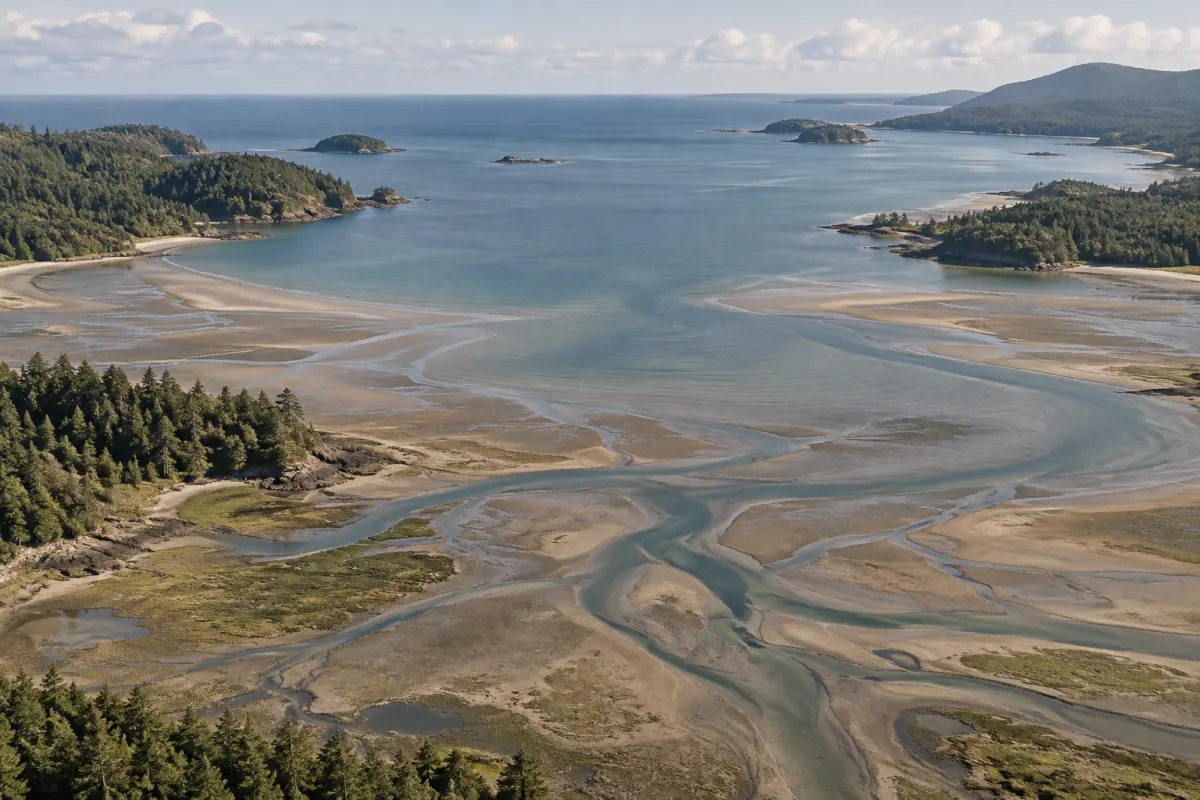
Read local variation
On the same date, an open coast and a narrow, shallow bay can move water differently. NOAA describes places with two similar high tides a day, one high tide, or two highs of different heights. These are examples of regional patterns, not predictions for every bay. For a place you care about, check the local tide table’s date, time, and reference datum, then compare it with an observation from the same day.
Water level and current answer different questions
A tide table gives predicted water levels and high/low times; it does not guarantee the current speed in a narrow channel or safe passage. Tidal currents are horizontal flows affected by local channels, weather, and observation conditions. Before an on-water activity, consult the local current forecast and official safety guidance.
Sources and scope
NOAA’s education collection and Ocean Service explanation describe how gravity, geography, friction, and tidal lag combine. This article explains the mechanism; it does not forecast real-time water levels or currents for a specific place.
Sources: NOAA tides guide · NOAA tide FAQ