How to Read Coupon and Principal-Loss Terms in Structured Notes
A headline coupon and a maturity principal formula answer different questions. Separate the reference asset, observation dates, barriers, and issuer credit risk when reading a term sheet.
Publication & corrections: infostoa · Editorial standards
Individual author and specialist reviewer information is not provided for this article.
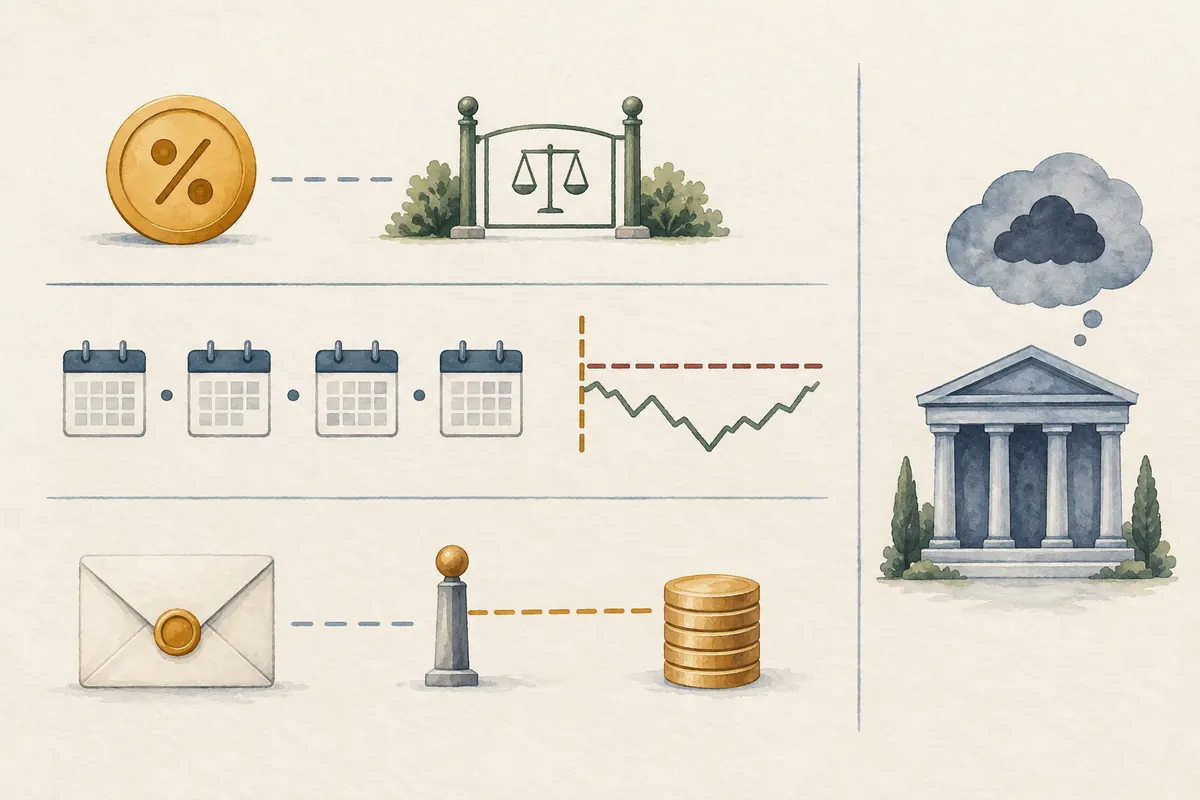
A structured note is a security whose payment can depend on the performance of a reference asset. A high coupon headline alone does not establish that payments are unconditional or that principal will be repaid. The SEC’s 2015 investor bulletin explains that notes may combine a debt component with an embedded derivative, and that structures and risks vary by product. This is an educational reading sequence, not an investment recommendation or legal or tax advice for a particular note.
Read coupon conditions on their own
A displayed coupon rate does not necessarily mean a fixed payment is due in every period. Find the payment frequency and dates, reference asset, observation dates, conditions for payment, treatment when a condition fails, and any early-call provision. If a note pays only when an asset is above a stated level on an observation date, the annualized headline should not be treated as a guaranteed yield. A coupon payment also does not establish that principal will be returned at maturity.
Identify whether the reference is one stock, an index or basket, an interest rate, a commodity, or a currency. Then read the definitions and examples to determine whether the note observes closing prices or intraday levels, uses the worst-performing asset in a basket, or allows the issuer to redeem early. The words “coupon” and “barrier” do not imply one standard formula; payment terms can differ substantially from note to note.
Separate a barrier from the maturity principal formula
A barrier is not a standard feature of every structured note. The SEC bulletin describes a knock-in feature in some notes: if a reference asset falls below a specified level, maturity principal or scheduled coupons may change. This is a feature of certain contracts, not a universal observation method or loss calculation.
Check whether a breach at any point during the term counts, or whether only specified observation dates matter; whether the term sheet uses intraday or closing values; and which reference value determines the loss after a trigger. Read whether payment is cash or could involve delivery of a depreciated asset, and analyze coupon loss separately from principal loss. If a diagram or marketing example leaves a definition unclear, return to the prospectus formula and risk disclosures instead of assuming a calculation.
Treat “protection” and issuer credit as separate risks
Investor.gov’s current SEC investor-education overview stresses that a note called principal-protected is not risk-free: repayment promises depend on the issuer’s creditworthiness. That overview concerns notes marketed with principal protection; it does not guarantee payments on all structured notes. Verify what the contract protects, when the protection applies, and whether the amount is before or after fees and costs.
A market loss tied to the reference asset and a credit loss caused by issuer default are distinct. Even a contractual principal-protection feature may fail if the issuer cannot meet its obligations. Conversely, the SEC says notes without principal protection may expose investors to loss of some or all principal based on the linked asset or index. Do not collapse these outcomes into one generic “barrier risk.”
Check resale, fees, and early redemption
Read liquidity terms in light of whether you can hold the note to maturity and might need cash earlier. The SEC bulletin says many structured notes are not exchange-listed, so secondary-market sales can be limited; an issuer or distributor may not promise to repurchase or make a market. Do not assume that a note can be sold on demand or at its issue price.
Compare the issue price with the issuer’s estimated value and look for selling, structuring, and hedging costs, caps on returns, issuer call rights, and tax terms. Distinguish a call at the issuer’s discretion from a right held by the investor, and do not assume a called note can be reinvested on the same terms. Securities rules and tax treatment differ by jurisdiction; the U.S. SEC materials should not be generalized as legal rules elsewhere.
Expert perspective: turn definitions into questions
The SEC Office of Investor Education and Advocacy’s 2015 bulletin calls attention to complexity, liquidity, issue price versus estimated value, knock-in provisions, and issuer credit risk. The bulletin itself says it is investor education, not a legal interpretation or a statement of SEC policy. For an actual offering, locate the final prospectus definitions and answer: when is a coupon paid, how is maturity principal calculated, when are observations made, and what remains unprotected if the issuer defaults?
Do not judge a note from a promotional phrase or expected coupon alone. The practical task is to read each condition separately and avoid using a yield number to conceal an unclear payoff formula.