Shellfish Biotoxin Advisories and Harvest-Area Closures
Marine biotoxins may not be visible and are not reliably removed by cooking. FDA and NSSP guidance explain why harvest origin and current area notices matter, and how to compare an advisory with a product’s traceability details.
Publication & corrections: infostoa · Editorial standards
Individual author and specialist reviewer information is not provided for this article.
Marine biotoxin risk in shellfish can vary with the harvest area and time. Toxins produced by harmful marine algae may accumulate in filter-feeding shellfish. Appearance and smell cannot establish whether a batch is safe, so buyers need the product’s harvest or approved-source information and current notices from the authority responsible for that area. The U.S. National Shellfish Sanitation Program (NSSP) offers one example of area management; notice systems differ across countries and regions.
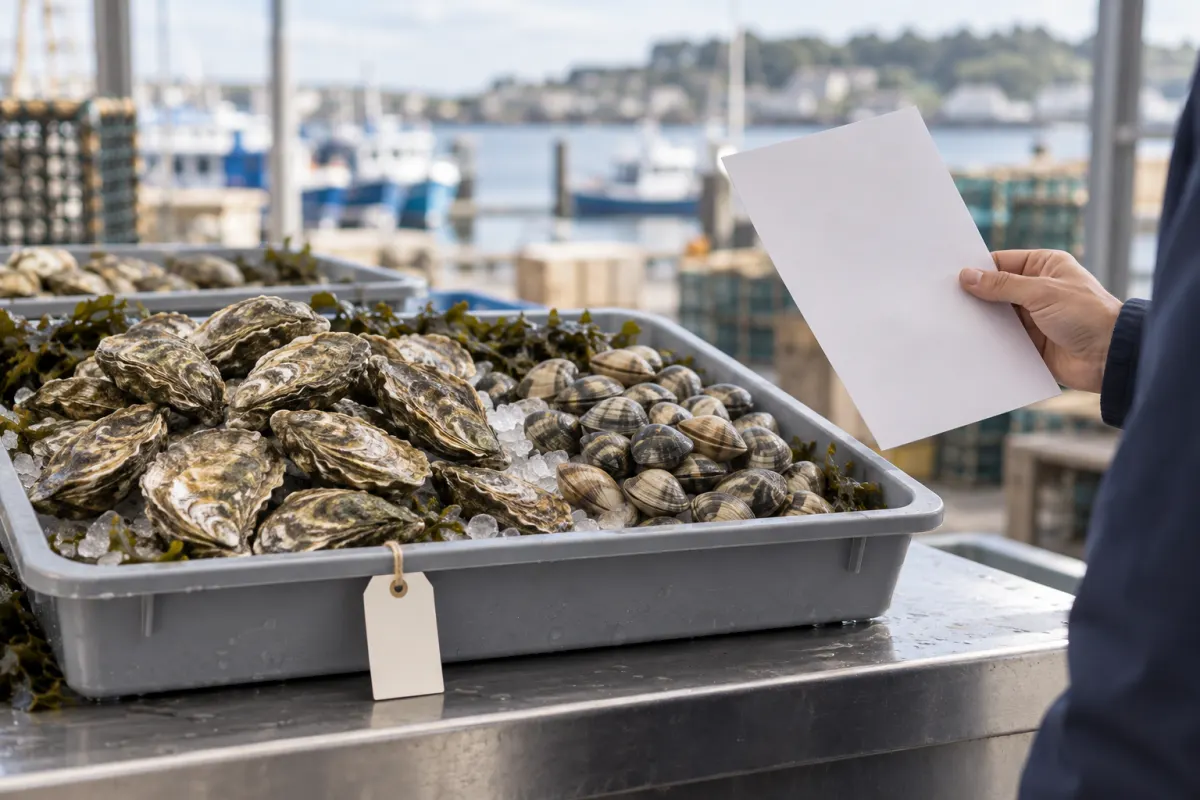
How algal toxins reach shellfish
When certain microscopic algae grow, toxins can enter the food web and accumulate in shellfish tissue. FDA’s seafood hazard guidance distinguishes several syndromes, including amnesic, azaspiracid, diarrhetic, neurotoxic, and paralytic shellfish poisoning. The toxin and risk pattern depend on the organism and location. A visible bloom is not required in every case, so the absence of obvious discoloration in the water is not proof that shellfish are safe. Check the species and harvest area instead of treating an entire coastline or all shellfish as one risk category.
FDA’s guidance describes natural toxins as temperature stable and says they cannot be reliably eliminated through ordinary cooking or freezing. Do not assume that thorough cooking neutralizes every marine biotoxin. These hazards also differ from bacterial food poisoning and histamine poisoning in fish. FDA describes histamine as a biogenic amine formed in susceptible fish after time-temperature abuse and bacterial activity, a different hazard from algal toxins in shellfish.
A closure applies to a defined area and period
The 2023 NSSP guide describes how U.S. authorities respond when shellfish-related illness is linked to a growing area: the implicated area is closed, relevant FDA and Interstate Shellfish Sanitation Conference (ISSC) specialists are notified, and closure or recall notices can be made available through ISSC. It is a framework for the U.S. program. Other countries may rely on local health, fisheries, or food authorities, so a buyer should not assume that one U.S. notice system covers every harvest location.
A closure can concern a particular growing area, species, harvest period, or implicated lot. A place name that looks similar is not enough to decide that a product is covered or unaffected. Compare the notice’s boundary, effective dates, shellfish species, and harvest or distribution details with the product information. Do not infer today’s status from an old advisory or a search-result summary when no current reopening notice is available.
Check notices before buying or eating
First, use the package, receipt, or seller’s information to identify the shellfish species and harvest area or approved source. Second, find the latest closure, advisory, or recall notice from the authority responsible for that area. Third, compare the notice’s area name or number, dates, and species with the product’s traceability details. If the match or current status is unclear, ask the seller or authority and do not eat the product while the uncertainty remains.
Notice checks work best when the product has traceable source information. At a restaurant, ask staff or the supplier for the harvest origin and whether the applicable official notices were checked. If an authority has closed a growing area, do not use smell, appearance, or cooking as a reason to ignore that warning.
What the specialist guidance means in practice
FDA’s Fish and Fishery Products Hazards and Controls Guidance is technical material for seafood processors and regulators analyzing hazards and HACCP controls. It explains that natural toxins may be undetectable by color, taste, or smell and are not reliably removed by cooking or freezing. For processors, knowing the harvest origin and using approved supply channels are therefore important controls. This is industry guidance; it does not provide a universal consumer testing threshold or a single alert system for every country.
If illness or a cluster of cases is suspected, retain product and package or purchase details and follow local public-health reporting instructions. This article is general information and cannot verify the live harvest status of an individual product. Check the responsible authority’s current notice for closures and reopening dates.