Fish During Pregnancy: How to Use the FDA/EPA Mercury Guide
The FDA/EPA chart is designed to help people who are or may become pregnant choose fish by mercury level, not to eliminate seafood. Learn the serving amounts, why tuna types differ, and how local-catch advisories change the decision.
Publication & corrections: infostoa · Editorial standards
Individual author and specialist reviewer information is not provided for this article.
For people who are or might become pregnant, or are breastfeeding, FDA and EPA advise eating 2 to 3 servings a week—8 to 12 ounces total—from the chart’s “Best Choices” list. One serving is 4 ounces, measured before cooking. The practical message is to choose a variety of lower-mercury fish and follow the category-specific frequency, rather than treating all seafood as interchangeable or avoiding all fish. The chart is United States guidance; local species names and local-catch advisories still matter.
What the three categories mean
The agencies group fish as “Best Choices,” “Good Choices,” and “Choices to Avoid.” For people who are or may become pregnant or are breastfeeding, the consumer advice is 2 to 3 weekly servings from Best Choices, or one 4-ounce serving from Good Choices and no other fish that week. Count servings by the amount before cooking and across the whole week. Choices to Avoid identifies fish the chart recommends this audience avoid. These labels are exposure categories based on mercury guidance, not grades of flavor, freshness, or general nutritional quality.
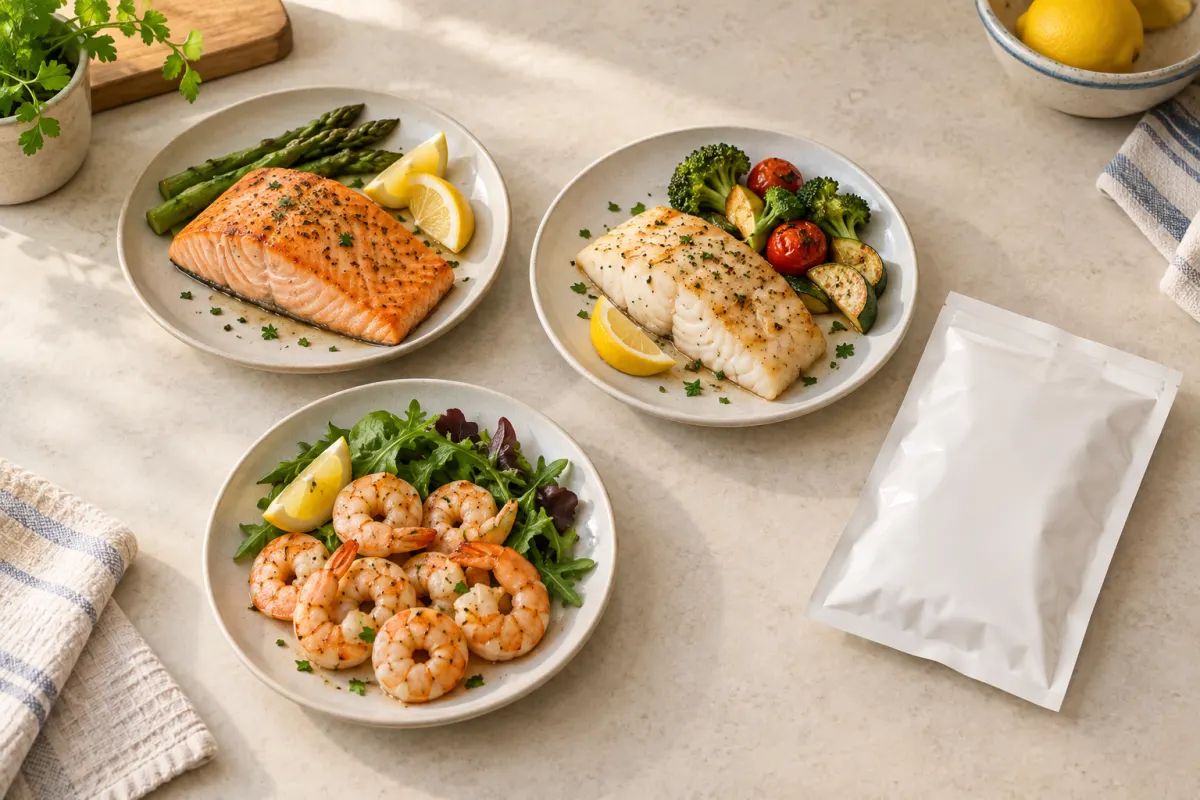
Best Choices includes a range of fish and shellfish, such as salmon, sardines, shrimp, some cod species, clams, and oysters. The current agency chart—not a memory of a common name—is the place to confirm an individual species. Mercury concentrations vary among species and can vary with size, age, and location. Cooking does not change a fish’s mercury category. Their Best Choices mercury category does not mean clams or oysters are safe to eat raw. FDA separately advises pregnant people to cook fish and other foods to safe internal temperatures to reduce microbial risk and to avoid raw fish. Identify the species and local catch area.
Tuna is not one category
The word “tuna” alone does not tell you how often to eat it under this advice. Canned light tuna is in Best Choices; albacore (white) and yellowfin tuna are in Good Choices; and bigeye tuna is in Choices to Avoid. The distinctions reflect the agencies’ species-level mercury information and do not claim that every can has been individually tested. Read the label when buying tuna and count it toward the relevant weekly frequency. If a restaurant menu does not identify the species, ask; when you cannot verify it, choosing an identified Best Choice is a straightforward option.
The FDA/EPA chart also contains location-specific distinctions. Tilefish from the Gulf of Mexico and tilefish from the Atlantic are not assigned the same category. This is one reason not to infer a category from a broad market name alone. A regional fish advisory is more relevant than the commercial chart when the fish came from a local lake, river, or coastal area.
The specialist explanation—and what it does not claim
FDA’s Q&A says the agency used mercury data for commercial fish and other evidence to estimate suitable frequencies for an average pregnant person, using a cautious, highly protective approach. That describes the technical basis for the categories; consumers should follow the chart’s explicit weekly advice for their audience rather than treating the underlying calculation as a separate allowance. Species and location distinctions are another reason to check the chart itself.
FDA and EPA also describe fish as a source of nutrients and say moderate evidence links pregnancy fish intake with support for a baby’s cognitive development. That is population-level guidance, not a promise about an individual outcome or a reason to disregard a clinician’s advice. The chart addresses mercury-based frequency; it is not a sustainability ranking or a complete assessment of every contaminant, allergy, or medical condition. People with a fish allergy, a medical dietary restriction, or a specific pregnancy concern should get individualized advice from their health professional.
Check local advice for fish caught by family or friends
Commercial fish categories should not be applied automatically to recreational catch. Check EPA’s fish-advisory resource for the specific water body and follow any serving limits or species warnings. If no advisory exists, FDA/EPA advise eating only one serving of that fish and no other fish that week. Pollutant levels can differ across waters even for fish with the same common name, so the location is part of the food-safety information.
When planning a week, use the 4-ounce serving size, note the species on the package or menu, and count the weekly total against its category. Varying choices within Best Choices helps avoid depending on one fish. For local catch, look up the advisory separately. These steps preserve the intent of the guidance: limit mercury exposure while retaining the nutritional role of fish in a varied eating pattern.