A Pet Evacuation Kit: Identification, Food, Records, and Rotation
A checklist for contacts, carriers, food, water, records, and replacement dates when evacuating with a pet. Medication and dosing remain under veterinary direction.
Publication & corrections: infostoa · Editorial standards
Individual author and specialist reviewer information is not provided for this article.
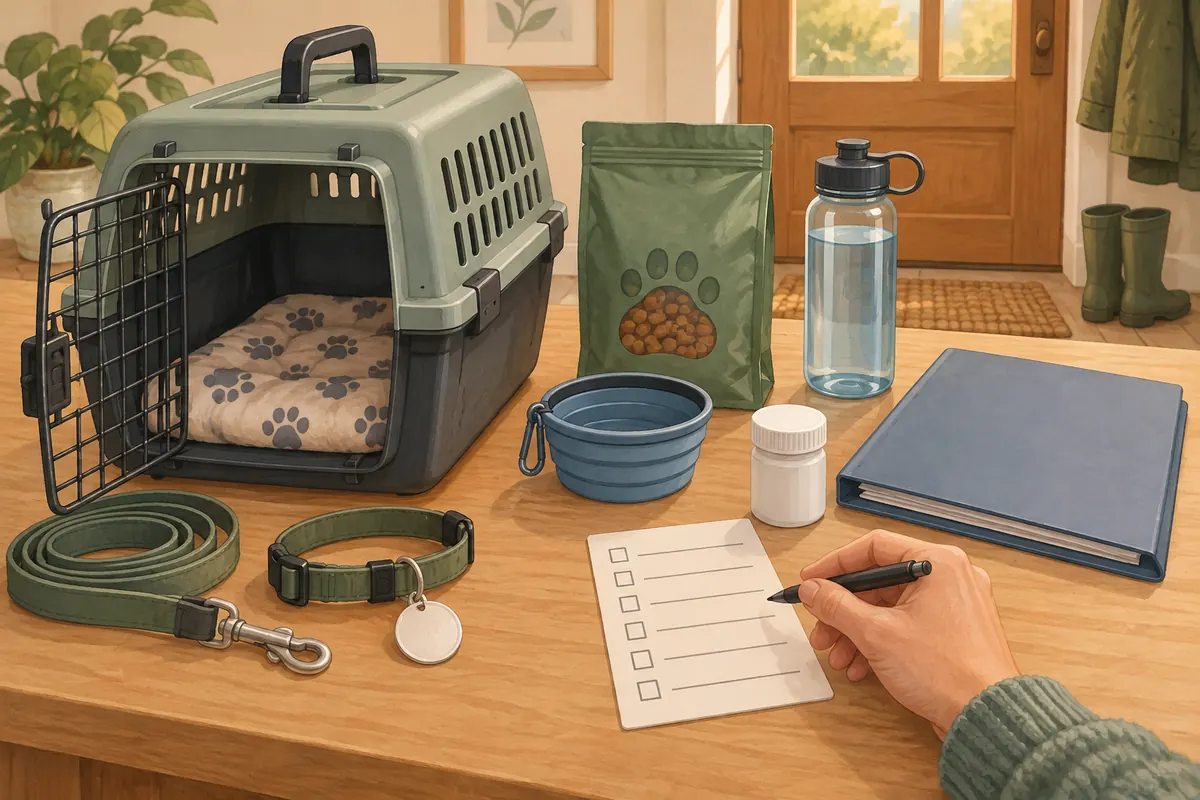
An evacuation kit should connect contacts, transport, and supplies so a household can move an animal safely and care for it after arrival. Ready.gov recommends several days of household essentials and names pet food and extra water as additional needs. The ASPCA advises identifying pet-accepting destinations and preparing identification and travel items in advance. Its quantities are attributed to the ASPCA rather than treated as universal veterinary prescriptions.
Choose destinations before an alert
Searching for shelter after an evacuation order can narrow options. Check pet-friendly hotels, relatives or friends outside the immediate area, local shelters, and boarding facilities recommended by a veterinarian. Acceptance can change with the event, location, species, size, and number of animals, so verify details instead of relying on an old list. Local emergency instructions and routes take priority; a kit does not override shelter rules.
If a rescue-alert sticker is used at home, keep the animal count and type and the owner’s and veterinarian’s contact details current. The ASPCA also describes marking a home as evacuated after departure when time permits. A sticker is a communication aid, not a rescue guarantee or substitute for evacuation. Identify a trusted backup contact, agree how they can reach the household, and share an alternate contact route in case the owner and animal become separated.
Keep transport, identification, and records together
Prepare a secure carrier for each animal and check its latch, handle, and ventilation. Put the animal’s name and owner contact details on the carrier, update its collar tag, and confirm the registration details for any microchip. Keep recent photos that show distinguishing features. Several identification methods can help after separation, but none guarantees reunion.
Keep veterinary and vaccination records, prescriptions, registration, and insurance information in a waterproof folder and, if useful, a secure digital location. Limit access to personal information. For an animal taking medicine, include the current medicine name, prescription information, and veterinarian contact details. Do not improvise a dose or substitute. The ASPCA advises asking a veterinarian what belongs in a pet first-aid kit.
Prepare for the animal’s routine and species
Start with the food the animal already eats and enough water for the expected trip. Ready.gov’s household list covers several days of supplies and calls out pet food and extra water. The ASPCA checklist includes food, bowls, cleanup items, leash or harness, spare lead, and carrier. It gives examples of 7–10 days of food and at least seven days of water; attribute those figures to that organization. Discuss an appropriate amount for the animal’s health, size, climate, and likely evacuation period with a veterinarian.
A pet on a prescribed or limited diet may not tolerate an abrupt food change. Familiar bowls and cleanup supplies can help in an unfamiliar setting. Birds, reptiles, and small mammals may have different transport, temperature, or bedding needs, so a dog-and-cat list should not be copied unchanged. The ASPCA separates considerations by animal group; the kit should likewise reflect the individual animal rather than assume one list fits all.
Rotate supplies and leave prescriptions to the veterinarian
Stored food and medicines can expire, spoil, or become unusable. The ASPCA gives replacement intervals for some supplies and notes that medicines need rotation. Ready.gov advises replacing expired items and reviewing household needs annually. Record purchase, replacement, and expiry dates on a checklist outside the kit, and follow each product’s storage instructions. Food and prescription medicines may require different conditions.
How much medicine to carry, whether it needs temperature control, and what to do if a prescription is interrupted depend on the animal and product. This article gives no doses or treatment directions. Ask the veterinarian about an evacuation plan, emergency contacts, record copies, refill options, and storage. The checklist should make existing veterinary instructions easier to find, not replace them.
Make the final check usable by the household
Refresh the list when food, medicines, address, or contacts change. Following Ready.gov, review household needs and expired items at least yearly, and follow any shorter rotation interval the ASPCA specifies for particular supplies. Check that the carrier is reachable, the destination still accepts the animal, and family members know what each will carry. A short practice run can reveal the difference between owning a stocked kit and being able to leave with the pet.
The expert perspective is to adapt a general checklist to the animal’s species and health, while leaving medication decisions to its veterinarian. Another household member should know where water, food, records, contacts, and the carrier are kept. For multiple pets or animals with special diets or care needs, maintain an individual list. Hazards and shelter rules differ by location, so this is a framework to adapt to the household and official guidance, not a certified universal kit or safety guarantee.