Peptic Ulcers: H. pylori, NSAIDs, and Mucosal Protection
How H. pylori and NSAID exposure relate to the stomach and duodenal lining, with molecular claims kept within the sources reviewed.
Publication & corrections: infostoa · Editorial standards
Individual author and specialist reviewer information is not provided for this article.
The balance between mucosal protection and acid
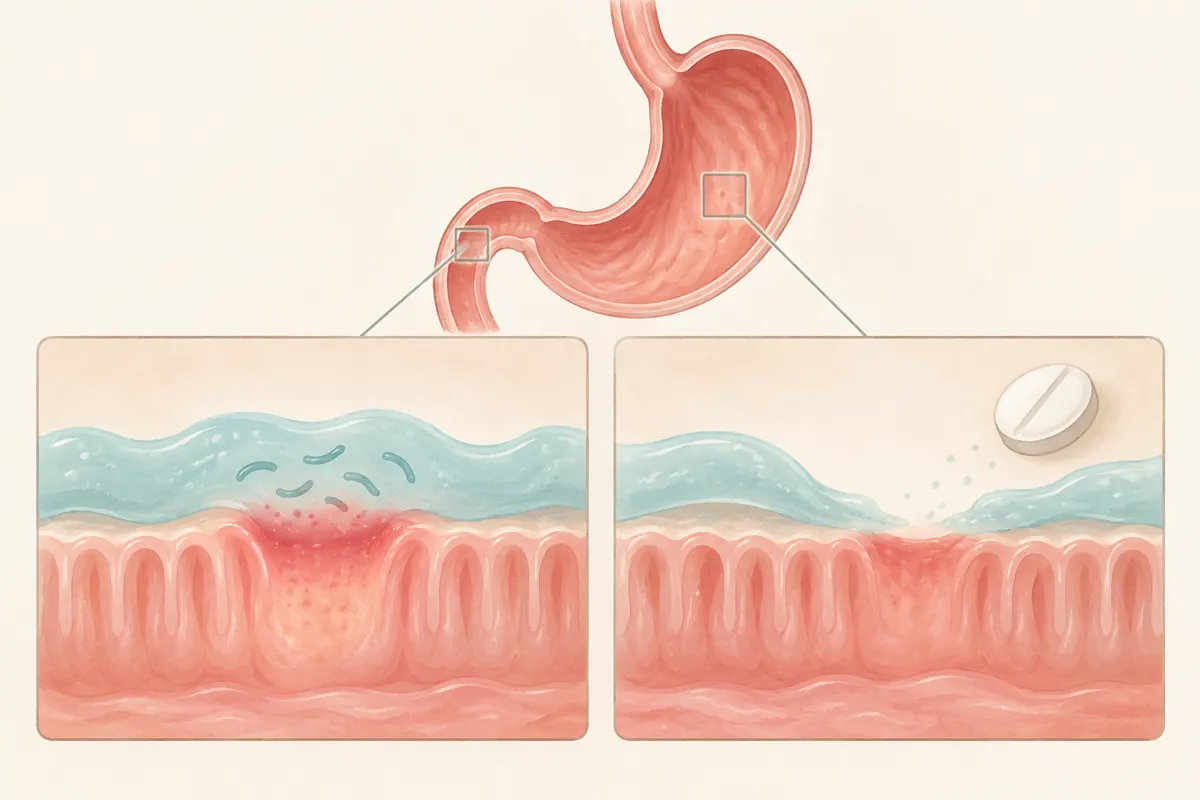
The stomach and duodenum encounter acid during digestion, but a mucus layer and other defenses help protect their lining. Mayo Clinic explains that the mucus layer usually shields tissue from acid; an ulcer can develop when acid increases or mucus decreases. A peptic ulcer is an open sore in the inner lining of the stomach or upper small intestine. Symptoms vary, and some people have no symptoms until a complication occurs.
Describing ulcers only as “too much acid” misses the common underlying causes. The National Institute of Diabetes and Digestive and Kidney Diseases (NIDDK) and Mayo Clinic both identify Helicobacter pylori (H. pylori) infection and nonsteroidal anti-inflammatory drugs (NSAIDs) as the most common causes. They do not act through one identical pathway, and both may be relevant in the same person.
H. pylori can live in the mucus layer and inflame tissue
H. pylori can live in the mucus layer covering the inside of the stomach. Mayo Clinic says the organism can cause inflammation and irritation of the stomach’s inner lining, which may lead to an ulcer. Infection does not mean that a person necessarily has an ulcer or symptoms. Some people with infection have no obvious problem, and indigestion-like symptoms cannot establish whether H. pylori is present. NCI describes the bacterial habitat as the mucus inside the stomach. That habitat is distinct from the stomach and duodenal sites where ulcers can occur.
NIDDK says researchers are still studying how infection spreads. Contact with an infected person’s vomit, stool, or saliva, as well as contaminated food or water, may be involved. That description should not be turned into blame about an individual’s cleanliness or behavior. The practical point is that symptoms alone cannot confirm infection; testing and interpretation belong in clinical care.
NSAIDs can weaken the lining’s protection
Aspirin, ibuprofen, and naproxen are examples of NSAIDs. These medicines can be useful for pain and inflammation, but regular or prolonged use can irritate or inflame the lining of the stomach and small intestine. NIDDK and Mayo Clinic explain that NSAIDs interfere with the natural protective ability of the stomach and duodenum. Risk can be affected by duration, dose, combinations with other medicines, prior ulcers, and H. pylori infection.
This explanation is not an instruction to stop or change a prescribed medicine. Over-the-counter and prescription products may contain overlapping ingredients, and the safest option depends on the person’s health and other medicines. Someone who uses pain relievers regularly or has had an ulcer can show a clinician or pharmacist the complete medication list and ask about personal risks. This article does not specify a dose or recommend a preventive drug.
A medicine record is more usable when it includes the ingredient, purpose, frequency, duration and prescription status as well as the product name. A fictional example would list daily prescribed aspirin separately from occasional ibuprofen. This lets a clinician or pharmacist check when the medicines overlapped; it does not establish that they caused an individual ulcer or tell someone which medicine to stop.
Professional perspective: keep the two causes distinct
NIDDK identifies H. pylori infection and NSAID use as two common causes of peptic ulcers. Mayo Clinic explains the protective mucus layer and describes how infection and medicines can affect it. Read together, these sources support a framework involving the mucosal barrier, infection-related inflammation, and medication exposure. They do not establish that every patient follows the same cellular sequence or that one virulence factor accounts for all ulcers.
Claims about CagA or a particular toxin require molecular evidence beyond the patient and professional guidance reviewed here, so they are not presented as established mechanisms in this article. Nor can abdominal pain or heartburn alone diagnose an ulcer. Black or tarry stool, blood in vomit, sudden severe abdominal pain, dizziness, or fainting may indicate bleeding or another complication and require contacting or seeing a clinician right away.
Testing is part of distinguishing possible causes. NIDDK explains that H. pylori testing may be used during ulcer evaluation and that the appropriate test depends on the situation. Symptoms overlap with common indigestion, and some ulcers are silent; timing of pain or its relation to meals cannot identify infection or ulcer location. NIDDK notes that clinicians may review medical and family history, examine the patient, and choose tests to identify the cause and check for complications. Clinicians interpret history and appropriate tests together.