Naps on Night Shifts: Timing, Duration, and a Safer Trip Home
A nap can be one fatigue countermeasure on a night shift, but its usefulness depends on shift length and post-wake grogginess. It cannot guarantee a safe commute.
Publication & corrections: infostoa · Editorial standards
Individual author and specialist reviewer information is not provided for this article.
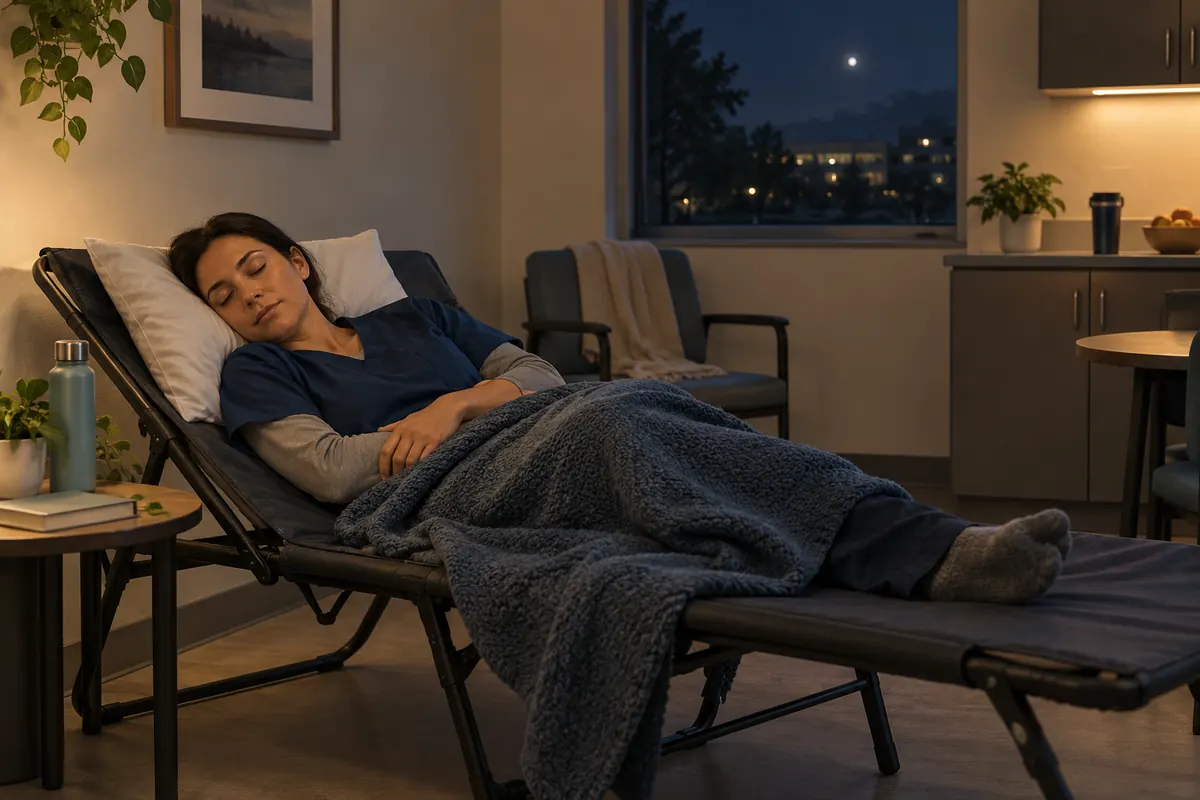
A planned nap can be one way to counter fatigue during night work, but its usefulness depends on shift length, the work setting, and how a person feels after waking. A break-time nap and the trip home after a shift are separate safety questions. Sleeping briefly does not prove that someone is ready to drive, especially if grogginess remains.
Start with shift length and the available break
The U.S. National Institute for Occupational Safety and Health (NIOSH) training for nurses says a 30-minute nap may help alertness during an eight-hour night shift. For extended night shifts of 12 hours or more, it discusses the possible role of longer naps. It cites studies in which a two- to three-hour nap helped maintain alertness and counter fatigue during 12- to 16-hour night shifts. These statements come from a training resource focused on nurses and long shifts; they are not a universal prescription or a guaranteed effect for every occupation or person.
A real workplace plan also has to account for staffing, handoffs, the permitted break, and whether essential safety tasks remain covered. The guidance is not an instruction to disregard workplace rules or leave a safety-critical role unattended.
Plan for the time after waking
A short nap may make it less likely that a person wakes from deeper sleep, but sleep onset and sleep debt vary. Set a reasonable alarm and check how alert you actually feel afterward. NIOSH discusses longer sleep opportunities in the context of extended shifts, but that does not make a long nap suitable for everyone.
Sleep inertia is the temporary grogginess that can follow waking. Judgment and reaction may be impaired during this period. A plan should include enough time to become alert and complete a handoff before returning to machinery, safety-sensitive duties, or driving. The end of a scheduled nap is not necessarily the end of sleep inertia.
Expert perspective: read recommendations in context
NIOSH’s 30-minute and two- to three-hour examples address different shift lengths in nurse training. The Sleep Foundation’s medically reviewed overview describes roughly 20-minute naps as a common adult option and notes that longer naps can lead to grogginess, while individual responses differ. These recommendations do not establish one ideal duration for every night worker.
Naps are a fatigue countermeasure, not a replacement for adequate main sleep. Work schedules, transition days, light exposure, noise, and caffeine timing can all affect the larger sleep plan. Persistent excessive sleepiness or falling asleep unintentionally is a reason to discuss sleep and work conditions with a health professional.
Treat the commute as its own risk decision
NIOSH mentions that a brief nap at work after a shift might help with the drive home, but explicitly says this possibility has not been tested empirically. It should not be presented as a proven crash-prevention method, a legal driving standard, or a guarantee of safe alertness.
Before driving, notice warning signs such as heavy eyelids, trouble focusing, missed turns, drifting from the lane, or repeated yawning. If you feel too sleepy, do not start driving. Arrange a ride, use transit, or delay the trip where feasible. If sleepiness develops on the road, stop in a safe place rather than relying on loud music, an open window, or willpower. Employers should follow applicable fatigue-management and transport policies.
Use a log to improve the plan, not to certify safety
If practical, record shift start and end, nap opportunity and actual sleep, grogginess after waking, and the commute arrangement in consistent fields. Comparing several shifts can help a worker and supervisor assess whether a plan is sustainable. Separate the planned nap window from time actually asleep and note when sleepiness is strongest. Use the notes to discuss schedule adjustments, not as a safety threshold. A log cannot establish a minimum safe sleep duration, identify the cause of sleepiness, or determine fitness to drive. Follow local workplace procedures and seek professional help for ongoing severe sleepiness.