Museum Loan Condition Reports: Before-and-After Records
Use condition reports, photographs, loan identifiers, and return checks to keep a consistent record of a museum object on loan.
Publication & corrections: infostoa · Editorial standards
Individual author and specialist reviewer information is not provided for this article.
When a museum lends an object, staff need a way to compare its condition before departure and after return. The National Park Service (NPS) Museum Handbook advises recording condition and photographs before a loan, giving the borrower a copy of the report, and using it to check the object on return. Linking the record to a loan number, inventory, and packing instructions helps distinguish a prior flaw from a change noticed during transport.
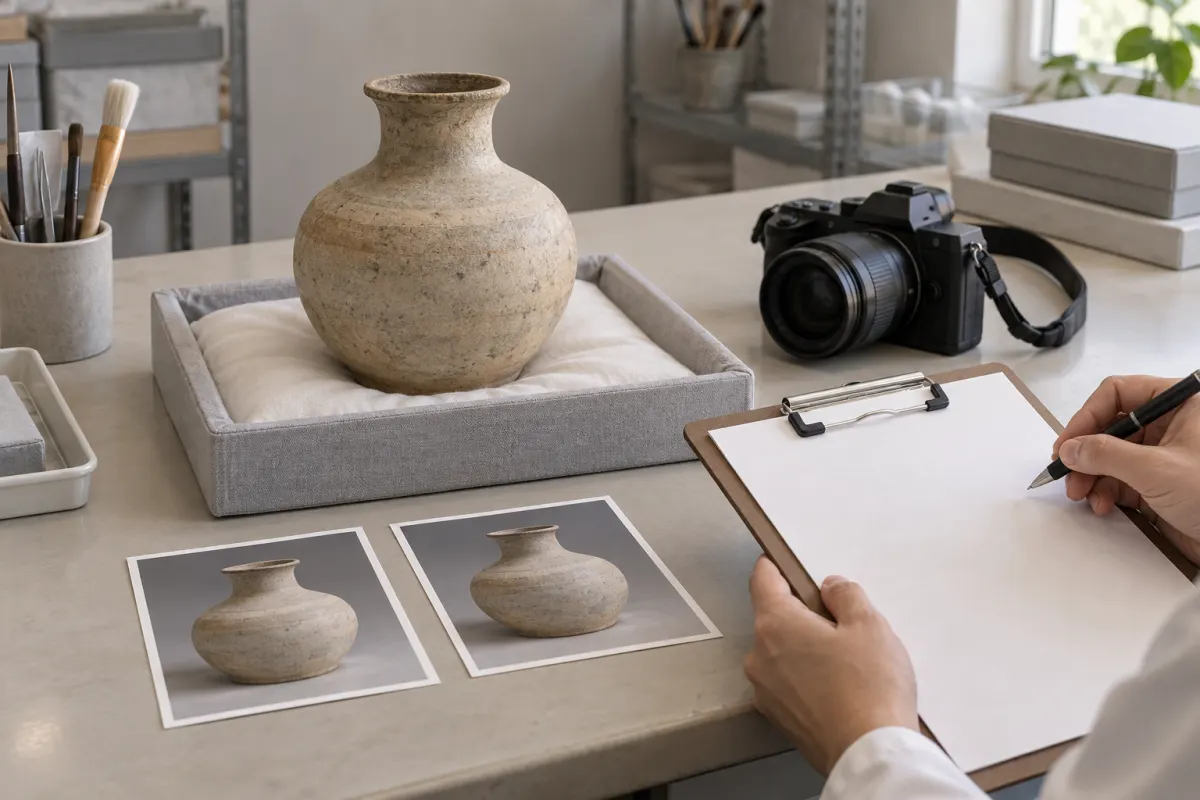
1. Record the baseline before the object leaves
The NPS Museum Handbook says a lender may document an object’s condition before lending it, send the report to the borrower, and use it on return to check the condition. NPS Form 10-637 is optional, but if it is not used, the lender should note each object’s condition on the list attached to the loan agreement. The form is not a universal requirement for every museum; the practical point is to preserve a condition record in the loan file. Follow any separate form or reporting requirement imposed by the institution or jurisdiction.
Link the report to the object’s loan and catalog identifiers. Describe visible features such as cracks, abrasion, loose components, and earlier repairs in specific terms, including where they are and how extensive they appear. Avoid guessing at cause or relying on broad labels such as “good condition.” Photographs do not replace written observations, but they can show a surface, location, or detail that is hard to describe. Use the same identifier in the file name, inventory, images, and agreement so each record points to the same object.
2. Keep photographs and written observations together
NPS advises photographing loaned objects, with an exception for loans to repositories. Include an overall view and images of relevant details, and connect each detail image to the object and area it shows. Record the date and view consistently so staff can compare it with a return photograph. Do not turn or expose a fragile object just to obtain a better image; follow the handling plan.
Keep the report and photographs with both the borrower’s copy and the lender’s official loan record. The NPS chapter says that when no separate condition report is used, condition still belongs on the attached object list. Do not leave condition evidence only in a staff member’s email or personal photo folder. Retain it with the loan number and catalog record under the institution’s recordkeeping rules. Restrict or share sensitive images according to the museum’s privacy and security policies.
3. Compare the object with the same record on return
When an object comes back, inspect it against the pre-loan identifier, written observations, and photographs. Record the areas checked and any visible change instead of relying on memory or a general impression. If a difference appears, note its location, extent, and appearance, and take a comparable photograph. NPS directs staff to record return changes on the condition report and catalog record. Updating the object’s location and condition information connects the loan history to future collection care.
Check packing materials, supports, detached components, and the outer container as well, while distinguishing what was observed from any conclusion about cause. If a change is found, follow the institution’s internal reporting and borrower-contact procedure. A condition record does not automatically determine responsibility or prove how damage occurred. It preserves an observable before-and-after account that can inform further investigation and conservation decisions.
4. Connect the report to the loan agreement and packing plan
The NPS Handbook recommends linking loan documents to an identifier and checking the inventory, condition information, and handling or packing instructions during shipment and return. Attach the report to the agreement so the borrower and lender refer to the same baseline. Include the return process in the loan file; update the catalog record and location when the object is back. This keeps condition evidence from becoming a detached file after the loan closes.
Forms, reporting roles, insurance and transport requirements, and record systems vary between institutions. NPS procedures are written for U.S. federal museum collections and should not be treated as law that automatically governs every lender. Check the loan agreement, local policy, and conservator’s directions together. For a fragile or unstable object, settle on photography, supports, and packing with a conservator before moving it.
5. Expert perspective: separate observation from treatment decisions
The American Institute for Conservation (AIC) describes conservation as examination, documentation, treatment, and preventive care supported by research and education. Conservators specialize in materials and follow professional ethics. A condition report is a consistent record of visible features; it is not a diagnosis that establishes why a crack formed or whether treatment is needed. If a new change is difficult to interpret, ask a conservator with relevant material expertise to assess it. That referral does not promise a particular treatment or outcome.