Iodized Salt at Home: What Storage and Cooking Studies Actually Show
Iodized labeling does not tell you how much iodine reaches a meal. WHO's public-health guideline and a 2018 Ethiopian salt survey clarify what covered storage, purchase checks, and adding salt after cooking were associated with—and what the evidence cannot prove.
Publication & corrections: infostoa · Editorial standards
Individual author and specialist reviewer information is not provided for this article.
Iodized salt is a public-health tool for reducing iodine deficiency, not a reason to use more salt. WHO's technical guideline addresses iodine fortification of food-grade salt while placing it alongside strategies to reduce salt intake. At home, the practical approach is to keep within ordinary sodium guidance, check the product's iodization label, and limit exposure to moisture and air during storage. A package label alone cannot tell you how much iodine a person ultimately absorbs from a meal.
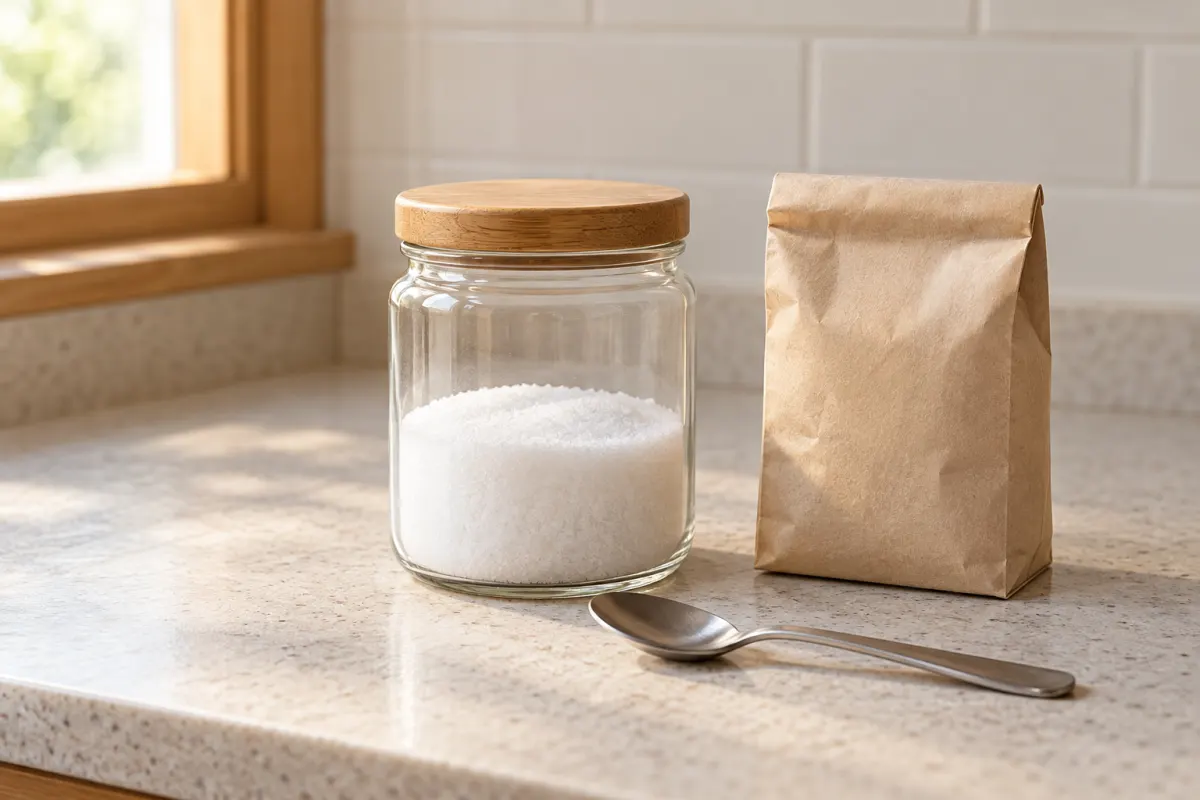
A label and a measured concentration are different things
An “iodized” label tells a shopper that iodine has been added under a fortification program. The concentration in a sample can still vary with production quality control, distribution, storage time, and conditions. Researchers in Ethiopia tested salt collected from markets and households rather than relying only on package claims. Their results describe samples from a defined place and period; they are not a worldwide estimate or a measurement of every product now on sale.
Keeping salt in a covered container and away from damp conditions is a sensible way to reduce exposure during ordinary storage. The study found a statistical association between covered storage and salt meeting its iodine threshold. It did not experimentally show that a lid alone preserves iodine in every salt, package, climate, or duration. Household handling and iodine quality control earlier in the supply chain are separate parts of the system.
What the Ethiopian samples measured
Chaka and colleagues collected 1,862 samples in 2018 across nine Ethiopian regions and two city administrations: 931 household samples and 931 market samples. They measured iodine using iodometric titration and also asked households about purchasing, storage, and cooking practices. Using the study's adequacy threshold of at least 15 parts per million (ppm), 88.1% of household samples and 89.1% of market samples met the threshold. These are proportions of tested salt samples, not measurements of each participant's iodine status or daily iodine intake.
In adjusted analyses, households that requested iodized salt when shopping, stored salt in a container with a lid, or reported adding salt after cooking had higher odds of having salt above the study threshold. For covered storage, the adjusted odds ratio was 1.92. That means the odds were statistically higher in this cross-sectional dataset; it does not mean that a lid doubled iodine concentration or caused the difference. Other factors may contribute, and a one-time survey cannot establish which behavior caused the measured salt level.
WHO expert guidance and limits of the cooking evidence
About 56.9% of surveyed households said they added salt after cooking or while serving. That practice was associated with adequate iodine in the study. But the researchers did not run a controlled cooking experiment comparing iodine retention across recipes, temperatures, or preparation times. The finding therefore does not prove that every recipe should be salted at the end, or specify how much iodine a particular meal retains. It is evidence about reported practices and measured household samples in that survey.
WHO's document is program guidance for food-grade salt fortification; it is not a household instruction to increase salt consumption. Salt is a source of sodium, so eating more salty food to obtain iodine would run against the guideline's salt-reduction context. If you have a concern about iodine intake, pregnancy, a health condition, or medication, ask a qualified health professional about your circumstances. Neither the label nor this population study diagnoses an individual's nutritional status.
What a household can reasonably do
Read the iodization statement on the package, keep salt covered and dry, and follow local dietary advice about sodium. Choose the point in cooking when salt is added based on the recipe and taste, not a claim that the Ethiopian survey established a universal method. Reliable iodine supply also depends on manufacturers' fortification processes and quality checks during distribution. Separating these three issues—labeling, household exposure during storage, and quality assurance—keeps the study's observations in proportion and matches WHO's public-health framing.
The study's limits matter when applying its numbers. It was cross-sectional and based on Ethiopian households and markets; its salt samples and reported behaviors reflect the survey context, and the article notes that data collection dates from 2018. The paper was published in 2026, but publication date does not make the underlying measurements current. It is useful evidence about how coverage and practices can vary, not a current iodine test for a particular brand or country.