Drying Laundry Indoors: Manage Humidity, Ventilation, and Moisture
A practical guide to drying clothes indoors while limiting excess moisture, condensation, and mold conditions, using EPA and ENERGY STAR guidance.
Publication & corrections: infostoa · Editorial standards
Individual author and specialist reviewer information is not provided for this article.
The issue is where the water goes
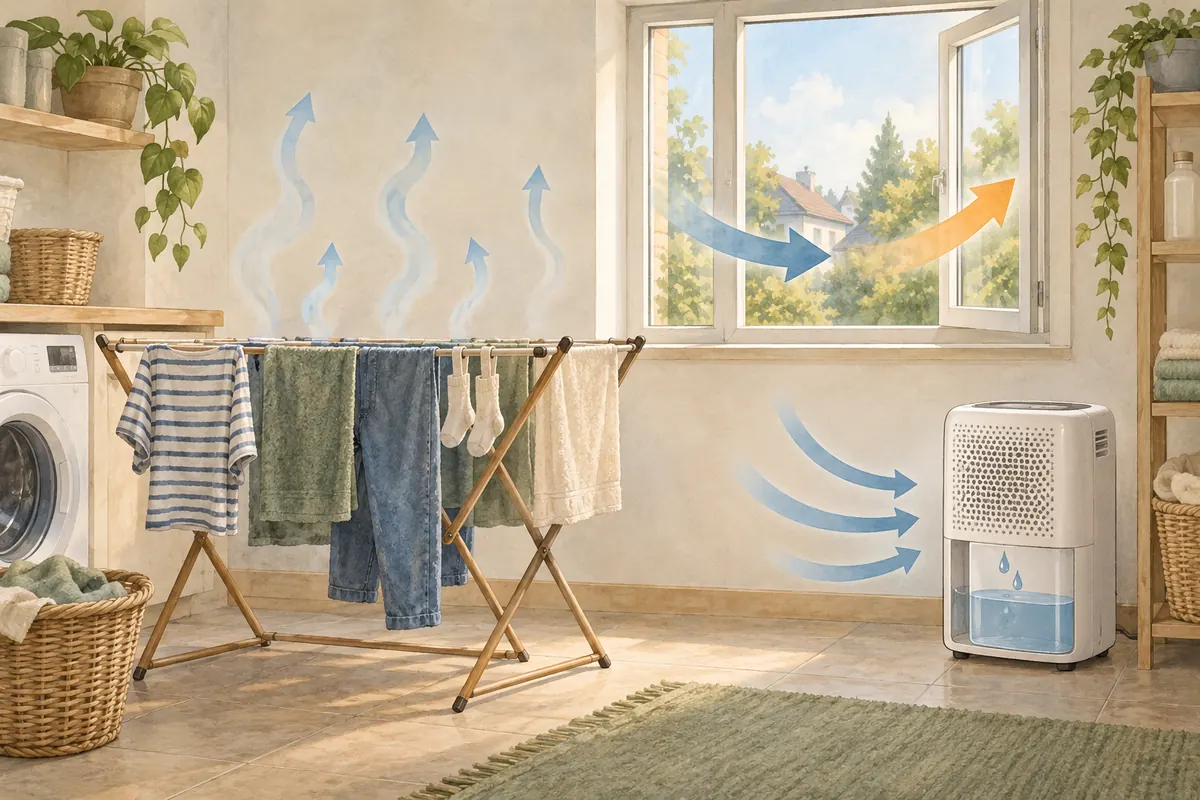
Indoor air-drying is convenient, but water evaporating from clothes does not disappear: it enters room air and can condense on colder surfaces. Beads of water on windows, or damp corners behind furniture, are signals to look beyond how quickly the laundry dries. The U.S. Environmental Protection Agency (EPA) advises keeping indoor relative humidity below 60 percent, ideally between 30 and 50 percent if possible. That range is guidance, not a promise that every home will avoid condensation. Outdoor temperature, insulation, ventilation, and surface temperature also matter. The EPA’s Mold Course, Chapter 2 discusses high humidity, condensation, and leaks as related moisture problems.
Reduce how long moisture stays in the room
Before hanging clothes, use an appropriate spin cycle to remove water and leave space between garments. A towel folded over another thick item dries slowly where the layers touch because air cannot circulate well. If possible, use a room separate from everyday living areas and close its door to limit moisture spreading through the home. The room still needs a way to exhaust or remove moisture; shutting the door alone does not dry the air.
Decide whether to open a window by comparing indoor and outdoor conditions. When outside air is very humid during rain, or much colder than the room, leaving a window open for a long time may not speed drying and can cool surfaces enough to encourage condensation. When outside air is drier and ventilation is safe, a short period of cross-ventilation can help carry moisture away. Check that a bathroom or kitchen exhaust fan actually vents outdoors. The EPA notes that moisture-producing appliances such as clothes dryers should be vented outside, and inadequate ventilation can allow indoor moisture to build up.
Use a humidity reading to choose ventilation or dehumidification
A basic hygrometer that also shows temperature can make room conditions easier to observe. Place it near, but not directly on, the drying rack. If readings stay near or above 60 percent and window condensation or musty odor recurs, reduce the amount of laundry, move the rack, or improve exhaust. A hygrometer measures relative humidity at one location; it does not reveal moisture inside a wall or behind a wardrobe.
If ventilation is not enough, consider a dehumidifier. ENERGY STAR says capacity depends on both room size and how damp the conditions are, and identifies laundry drying as a possible high-moisture load. Compare rated water-removal capacity and energy efficiency, and check whether the unit stops when its bucket is full, supports a drain hose, and is designed for the room’s operating temperature. Keep drainage away from electrical connections and follow the manufacturer’s safety instructions. A dehumidifier removes moisture from air; it does not repair a plumbing leak or dry a wet wall assembly by itself.
Expert perspective: trace the moisture path, not one number
Building-moisture guidance is most useful when it asks both how humid a room is and where water is entering, being produced, or failing to leave. The EPA’s account brings together everyday sources such as cooking, showers, and clothes drying with insufficient ventilation and condensation on cold surfaces. A single high reading does not prove mold is growing. Equally, an acceptable average reading does not make a recurring leak or a persistently wet patch harmless. If musty odor, visible staining, condensation, or wet ceilings and walls continue after changing the laundry routine, ask a qualified building or plumbing professional to investigate the source rather than relying on a household dehumidifier to mask it.
A practical sequence
When feasible, dry clothes outdoors or use a properly vented clothes dryer. For indoor drying, concentrate the rack in one suitable room, leave space between items, and exhaust moisture from that room. Observe humidity and condensation; add dehumidification when ventilation cannot keep conditions under control. ENERGY STAR recommends outdoor clothes-drying, proper outdoor venting for clothes dryers, and bathroom or kitchen exhaust fans to remove moisture at its source. These suggestions still need to fit the climate, building design, and available equipment where you live.
Recording readings at the same spot before and after a change makes room-level comparisons more useful.
Sources
- U.S. EPA, Mold Course Chapter 2: Why and Where Mold Grows — Agency guidance on indoor humidity, moisture sources, ventilation, condensation, and drying.
- ENERGY STAR, Dehumidifiers — Guidance on laundry as a moisture load, dehumidifier sizing and safe placement, and reducing indoor moisture at its source.