Driving in Iceland in Winter: Plan Around Road and Weather Conditions
Check official conditions by route segment and set practical rules for rerouting or stopping when roads close, ice forms, or conditions change.
Publication & corrections: infostoa · Editorial standards
Individual author and specialist reviewer information is not provided for this article.
Plan to change the trip with the road and weather
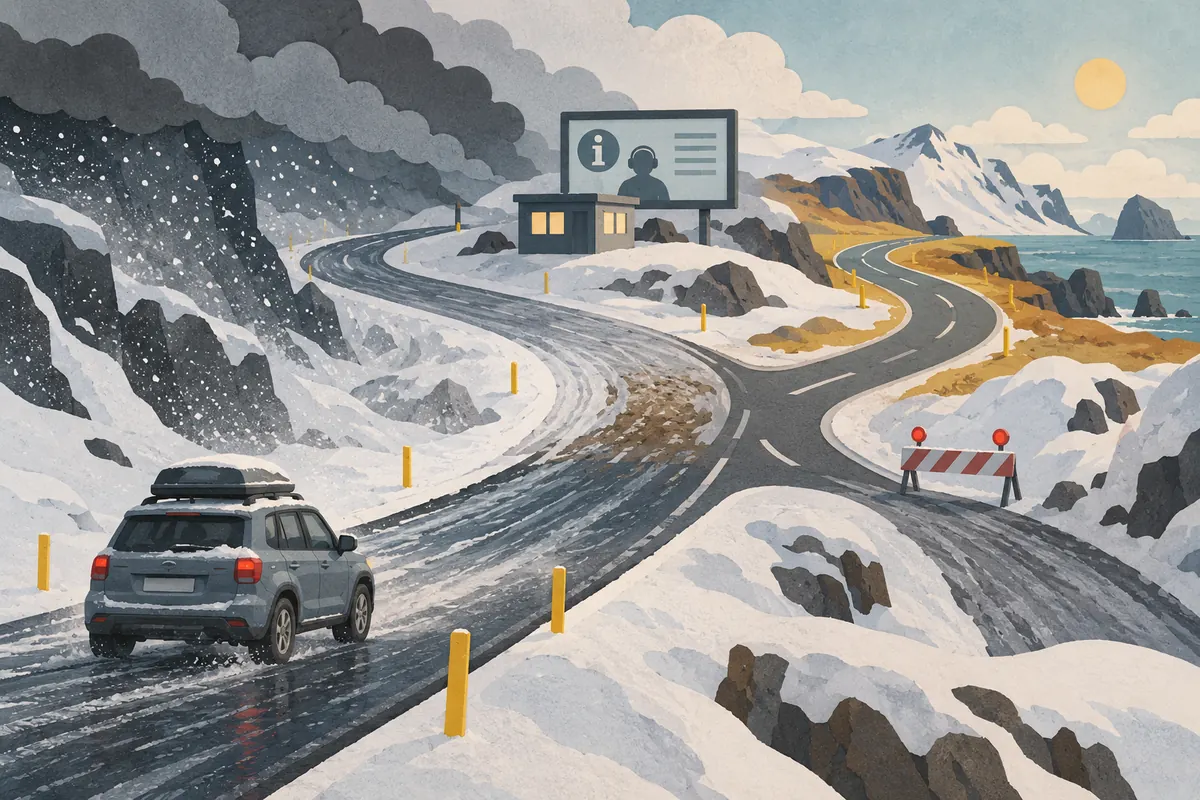
Winter driving in Iceland is not a route choice you make once before leaving. It is a plan updated as you check official road conditions and weather for the sections ahead. If a road is closed, icy, exposed to strong winds, or losing visibility, shortening the day or staying put may be safer than protecting a sightseeing schedule. SafeTravel advises checking both roads and weather and warns that ordinary map apps may not show closures or impassable roads.
Divide the route into sections
Vegagerðin, Iceland’s Road and Coastal Administration, provides the official Traffic Info portal for road information. Do not read a drive only as one line from lodging to destination. Break it into exposed coast, mountain sections, bridges, and gravel approaches where conditions can differ. Check the map’s status indicators and closures, and adopt a clear rule: do not enter a restricted or closed section just because a navigation app still draws a route through it.
SafeTravel recommends checking weather as well as road conditions. Wind, precipitation, temperature, visibility, and surface reports describe different hazards; one favorable number does not settle the decision. If the drive crosses several weather areas or lasts for hours, decide where and when to recheck. Assign a passenger or wait until a safe stop rather than handling a phone while driving.
Planning a fallback is part of route planning. Identify a place where you can turn back, wait, or stay overnight and an alternate destination that does not require crossing the same exposed section. Share the planned route and check-in times with companions. These steps do not promise connectivity or a particular travel time; they simply make a changed plan possible without rushing to recover lost sightseeing time.
Allow for ice outside winter and for fatigue
SafeTravel says winter road conditions can occur in spring and autumn too, and driving on ice can be very challenging; where possible, avoid those situations. The calendar season or a forecast temperature alone cannot establish that a particular surface is safe. The actual road report, local weather, driver experience, and vehicle all matter.
The guidance also calls out transitions from pavement to gravel, where tires can lose grip. Single-lane bridges, livestock on or beside roads, and fatigue after an overnight flight can change the risk of a day’s route. Build safe stopping places and alternate destinations into the plan. Do not try to recover lost time by speeding or continuing when tired. Stopping is a route decision that responds to conditions, not a failure of the trip.
Agree on departure, detour, and stop rules
In a hypothetical itinerary, a mountain section to the lodging closes after the morning check. The first question is whether the replacement avoids that section, not how few kilometers remain. A detour crossing the same closed section is not an alternative. Check another reachable destination or lodging, or postpone departure, and update fuel and group check-in plans. This illustrates a decision, not an open-road report.
There is no single safe wind or temperature threshold that applies to every Icelandic road. Exposure, vehicle, tires, driver experience, and surface conditions vary. Use observable signals—closure notices, rapidly worsening visibility, deteriorating road reports, vehicle instability, fatigue, or an official warning—as reasons to pause and reassess. A useful plan also lets every traveler agree in advance that anyone can call for a stop when conditions exceed their comfort or skill.