Home Inventory Records for an Insurance Claim: What to Keep
A room-by-room list, photos, and receipts can help describe belongings after a loss. Records do not guarantee coverage or payment; policy terms still control.
Publication & corrections: infostoa · Editorial standards
Individual author and specialist reviewer information is not provided for this article.
Why record belongings before a loss?
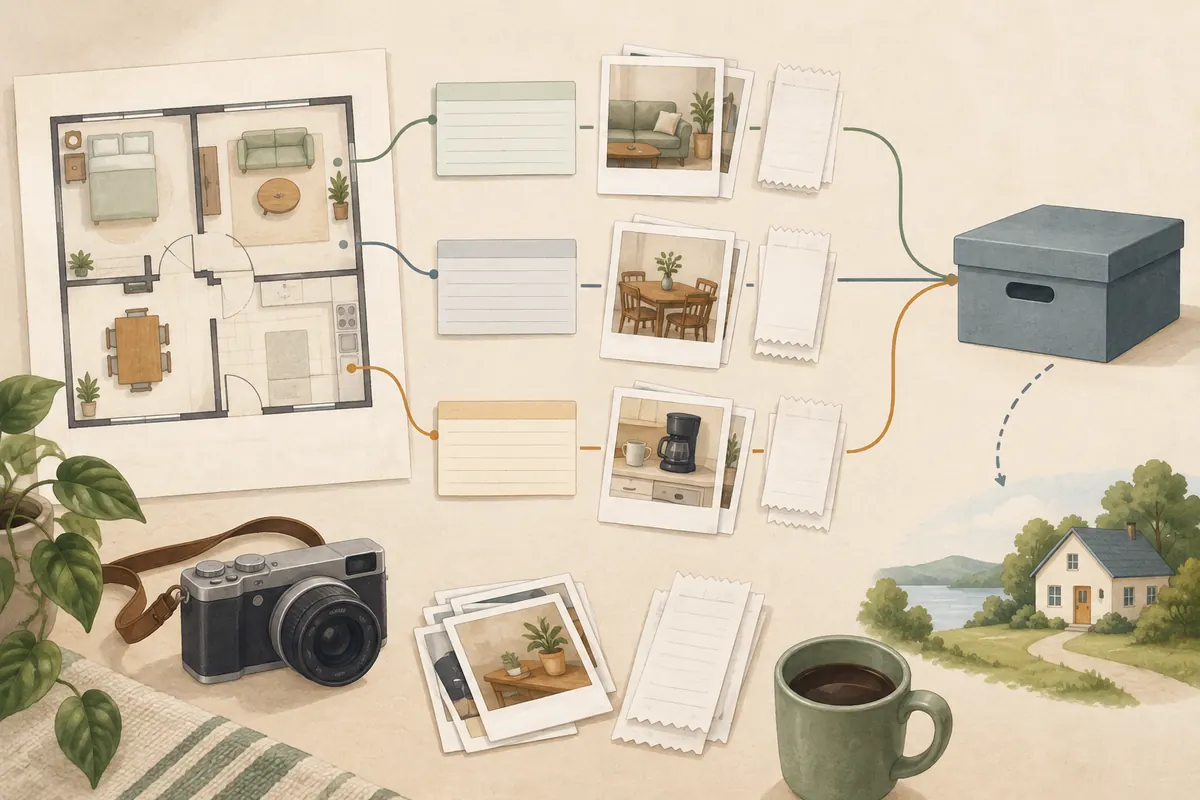
After a fire, theft, or other loss, it can be difficult to recall what was in a home, when items were bought, or what they cost. The Insurance Information Institute (Triple-I) home-inventory brochure suggests starting room by room or by category and choosing a format that is practical to maintain, such as a written list, photos, or video. Where available, connect items to receipts, purchase dates, prices, and make or model details, and keep a copy somewhere safe outside the home. Adding significant purchases while details are fresh can make later updates easier. An inventory may help organize a conversation with an insurance professional or claim records, but it does not guarantee coverage or payment.
Do not wait until you can document every closet perfectly. Start with one room and items costly or difficult to replace. Add drawers, storage areas, and seasonal belongings later. The point is to preserve reminders while you can inspect the home and its contents.
Capture enough detail to identify each item
Group entries by room or storage area. For important items, record the name, make, model or serial number, approximate purchase date and price if known. Take a close photograph of labels that a wide shot cannot show. These details help distinguish similar belongings.
Connect each entry to evidence you have, such as a receipt, order confirmation, warranty, or appraisal. Record a filename or storage location. If a receipt is missing, keep the item in the list and distinguish an estimate from a documented price. For new purchases, save the receipt and add the item while details are easy to find.
Make the record easy to maintain and recover
A slow phone walkthrough can capture rooms and larger belongings. Open cabinets where practical, then take close photos of serial numbers a wide shot cannot show. Video provides context, while a short written list makes individual items easier to search. Update entries after a move, major purchase, or clear-out instead of rebuilding the record each time. Once a year, open the files and check that they still work.
Keep a copy away from the home in a secure location. One copy on a device that could be damaged with the belongings is a weak backup. Test the copy and make sure you can recover account access. Do not include passwords, full payment-card numbers, or identity numbers; they are not needed to describe property. Limit sharing to people who need access and avoid public links.
For a shared copy, note who holds it, its location and its last update. If updating after every purchase is impractical, choose a monthly or seasonal review of receipts and photos. This is an optional maintenance routine, not a substitute for an insurer’s submission deadline.
Expert perspective: organize evidence, then review the policy
United Policyholders, a nonprofit organization supporting insurance consumers, advises people preparing a contents claim to document and value items, gather available receipts, photographs, and other evidence, and ask family or friends to help remember belongings. This practical guidance can make a difficult reconstruction more orderly; it does not promise coverage or a particular settlement. United Policyholders guidance
An inventory and a coverage review answer different questions. The list helps recall what you owned; the policy describes covered losses, limits, deductibles, valuation terms, and possible sublimits. A purchase price or online replacement price is not automatically the amount payable. Review the contract and ask your insurer or local insurance regulator about unclear requirements. Homeowners and renters may have different terms, and rules vary by location.
A small first session and its limits
Choose one room today. Take overview photos and record five important belongings, including model details and where purchase evidence is stored. Save another copy in a secure location and test that it opens. Expand to other rooms and storage areas later. Check whether your policy requires separate documentation or coverage for higher-value items.
This is general recordkeeping information, not legal, insurance, or claim-specific advice. Procedures and evidence requirements vary by insurer and location. Photos alone do not establish ownership, value, or coverage. If a loss occurs, follow current insurer and local instructions, keep copies of submitted materials, and retain dated communication records.
Sources
- Insurance Information Institute, “Brochure: Home Inventory”
- United Policyholders, “Home Inventory and Contents Claim Tips” — advises documenting items and values, gathering available receipts and photos, asking others to help remember, and reviewing policy terms.
- Triple-I, Three reasons to take a home inventory