An Evening Light Routine: Start With Timing and Brightness
A practical evening-light routine focused on overall brightness and schedule, with limits on universal blue-light claims.
Publication & corrections: infostoa · Editorial standards
Individual author and specialist reviewer information is not provided for this article.
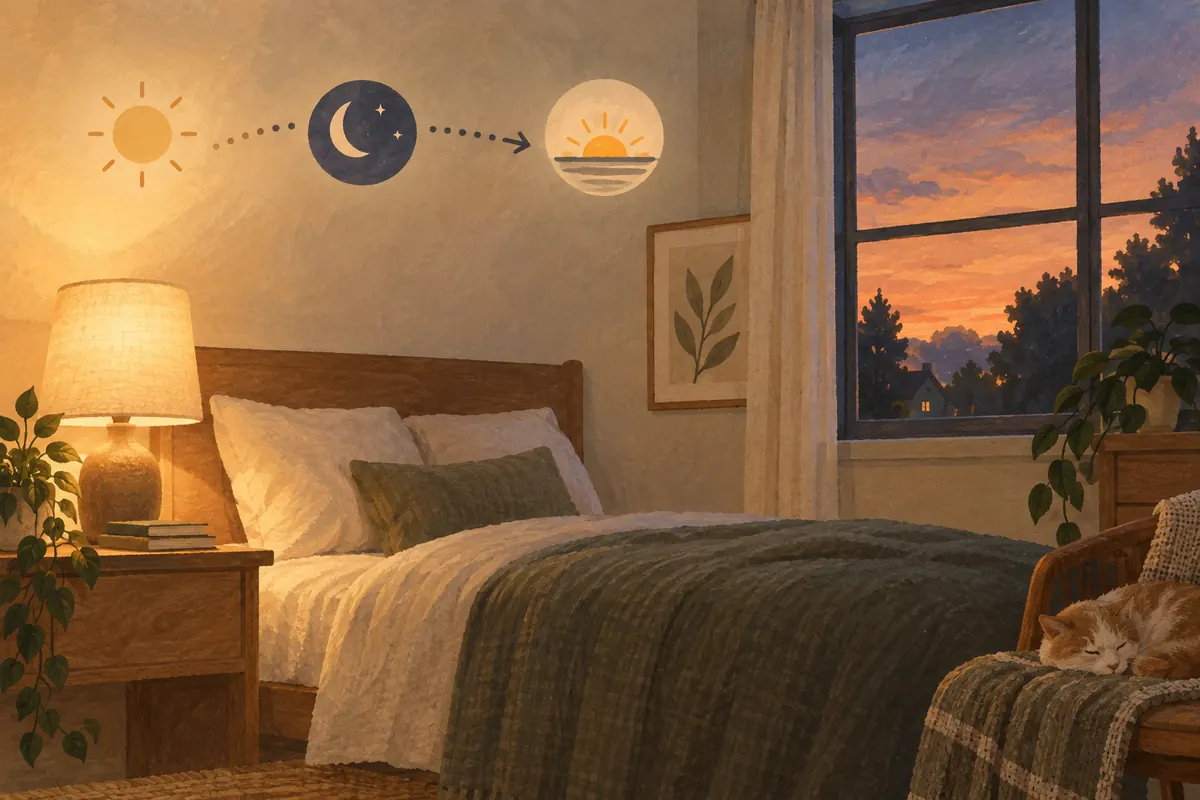
To adjust evening light, look beyond screen color: consider when you are exposed, how bright the whole room is, and whether your sleep schedule is steady. Light at night can affect circadian timing, but evidence does not establish that one blue-light filter improves sleep for everyone. A systematic review found varied study populations and methods, with relatively few studies measuring melatonin. It is also important not to confuse treatment guidance for a diagnosed sleep disorder with general bedtime advice.
Consider timing and the whole environment, not color alone
Light supports vision and also provides a timing signal to the body clock. For some people, prolonged bright light or screen use in the evening may affect sleepiness or when they fall asleep. The response depends on brightness, duration, distance, personal sensitivity, and the rest of the day’s schedule. Focusing only on short-wavelength screen light while ignoring room lighting and time spent using devices can miss much of the exposure.
A systematic review of glasses and filters intended to reduce short-wavelength light at night found substantial variation in participants and interventions. Many studies did not measure ambient light, and only a small number directly measured melatonin. The evidence therefore does not justify a universal claim that filters improve sleep or that changing color temperature alone solves a sleep problem.
Try a low-burden routine first
Start by keeping wake time reasonably consistent across weekdays and weekends. During the hour or two before bed, reduce bright lighting that is not needed. Avoid holding screens close for long periods, and notice whether notifications or absorbing content are pushing bedtime later. The goal is not perfect darkness or one prescribed color; it is finding an evening environment and activity pattern that supports winding down.
Rather than changing many habits at once, keep a simple weeklong note of wake time, evening light, bedtime, and next-day sleepiness. That can help identify a pattern that fits your life. If nothing improves, you do not need to blame yourself or keep changing lamps. Persistent insomnia, loud snoring or pauses in breathing, and severe daytime sleepiness are reasons to seek professional advice.
Clinical light therapy depends on the diagnosis
The American Academy of Sleep Medicine’s clinical guideline addresses intrinsic circadian rhythm sleep-wake disorders. Its suggestion of evening light therapy concerns adults with advanced sleep-wake phase disorder; it is not advice for everyone to use bright light at night. Other circadian disorders may call for different timing and treatment approaches.
Light can produce different timing effects depending on when it reaches the body clock. If you are considering therapy for a sleep disorder, discuss the diagnosis and history with a clinician instead of choosing intensity and timing on your own. Individual safety may also matter with eye conditions, photosensitivity, or medications.
Expert perspective: distinguish research findings from a personal routine
The systematic review shows why differences in measurements and participants make a single conclusion about filters difficult. The AASM guideline answers narrower clinical questions about diagnosed circadian disorders; it is not an evaluation of every evening habit in the general population. Read together, they support a sensible boundary: try low-burden changes to brightness and schedule in daily life, and seek clinical assessment for persistent symptoms.
The systematic review notes that ambient light was often not measured and relatively few studies measured melatonin. A filter result therefore cannot be treated as a measure of total room-light exposure or a precise shift in an individual’s body clock. Work, caregiving, and household sleep schedules also limit what can change. Keep enough light for safe movement and reading, and start where an adjustment—such as dimming a shared space—is practical.
A screen filter may be a personal comfort choice, but it should not be treated as a guaranteed sleep treatment. A consistent wake time, a less-bright evening when practical, and appropriate evaluation when symptoms persist are more useful starting points.