Before Cancelling an EU Package Holiday: Refunds and the Organiser’s Duties
How to distinguish a package booking from separate purchases, assess cancellation deductions and exceptional-circumstance refunds, and raise service problems with the responsible organiser.
Publication & corrections: infostoa · Editorial standards
Individual author and specialist reviewer information is not provided for this article.
First confirm that the booking is a package
A flight and hotel bought on the same website do not automatically make a package. The EU consumer guide looks at how at least two different travel services were combined and sold: a trader may combine them under one contract, or a booking path may meet specific rules for a package or a linked travel arrangement. Stand-alone flights and hotel bookings can follow different rules. Before relying on package rights, save the confirmation, standard information form, contract, and the organiser’s and retailer’s names. The contract and national rules matter when the arrangement is unclear.
If you cancel for personal reasons, check the fee basis
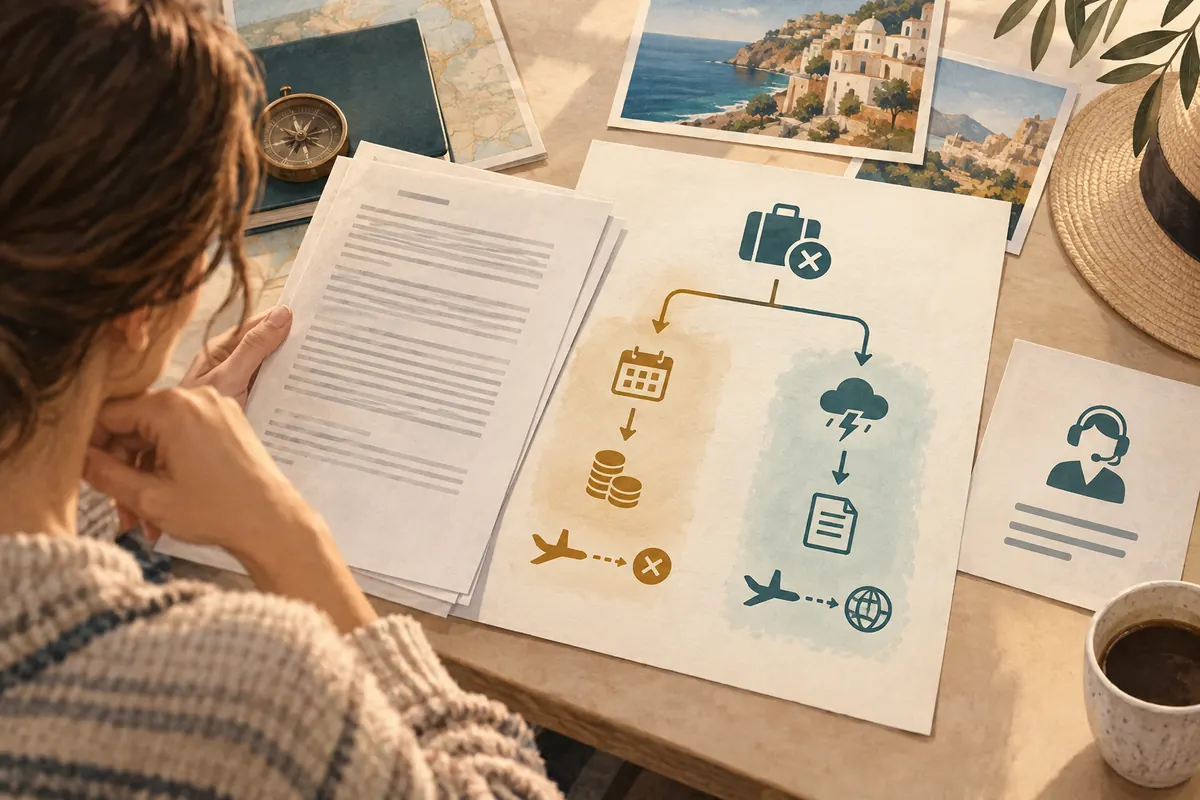
A traveler can end a package contract before departure, but an organiser may deduct a reasonable termination fee. The timing of cancellation is one factor, so “cancel anytime for a full refund” is not a safe assumption. Check the contract for the fee method and deadline, then send a dated cancellation notice through a channel that preserves a copy. Ask for an itemized calculation and the expected refund date. A transfer to another traveler may be possible under conditions, with a reasonable charge limited by the organiser’s actual transfer costs. These package-contract rules do not decide what a separate travel-insurance policy covers.
Exceptional circumstances are a different route
When unavoidable and extraordinary circumstances at or near the destination are likely to affect the package significantly, the traveler may be able to terminate without a fee and receive a full refund of payments. The EU guide gives natural disasters and serious security problems as examples. Whether a particular event meets the test depends on its location, timing, and effect on the trip; a warning or headline alone does not establish every traveler’s entitlement. In this situation a full refund does not itself mean additional compensation is due. Keep dated evidence about the event and the services affected, and ask the organiser to state its decision and calculation in writing.
When a service fails, contact the organiser as well as the provider
The organiser is responsible for proper performance of the services included in the package, even when another company supplies them. If transport, accommodation, or an included activity differs from the contract, document what was promised and what happened, notify the organiser promptly, and give it a chance to remedy the problem. The guide says the organiser must resolve a service problem at no extra cost; where suitable alternatives cannot be arranged, return transport and compensation may also become relevant under the applicable conditions. Save receipts and messages, and do not assume that a complaint to the airline or hotel alone has notified the package organiser.
Expert perspective: use cross-border consumer support for the next step
The European Consumer Centres Network (ECC-Net) can explain consumer rights and help residents of the EU, Iceland, or Norway seek resolution with a trader in another participating country. It is an advice and assistance network, not a court or enforcement authority, and it does not guarantee a refund or favorable outcome. Contact the centre in the country where you live and provide the contract, booking confirmation, cancellation notice, organiser’s reply, and a concise timeline. For a dispute within one country, a different national advice or dispute-resolution route may apply. Because package rules are implemented through national law and can change, check the current official consumer guidance for the country connected to the contract.