Cultural Heritage in an Emergency: Reporting, Decisions, and Handoffs
A practical role and communication chain for cultural-heritage emergencies, grounded in UNESCO’s intangible-heritage convention and ICCROM’s adaptable first-aid framework.
Publication & corrections: infostoa · Editorial standards
Individual author and specialist reviewer information is not provided for this article.
Make the first report factual, locatable, and safe
When someone notices possible damage to cultural heritage during a flood, fire, storm, or conflict, the first priority is human safety and the established emergency chain. The observer should not enter a hazardous area or move an object to improve a photograph. A concise report should identify the place and heritage element, the time observed, visible changes rather than a speculative diagnosis, emergency responders already present, and a safe way to call back. Photographs, recordings, and community knowledge should be shared only under the incident commander’s rules and with appropriate consent. For intangible heritage, a report may also need to distinguish interruption of a practice or transmission conditions from damage to a building or collection. This first message is an observation for triage; it is not a professional conservation assessment or a final judgment about cultural significance.
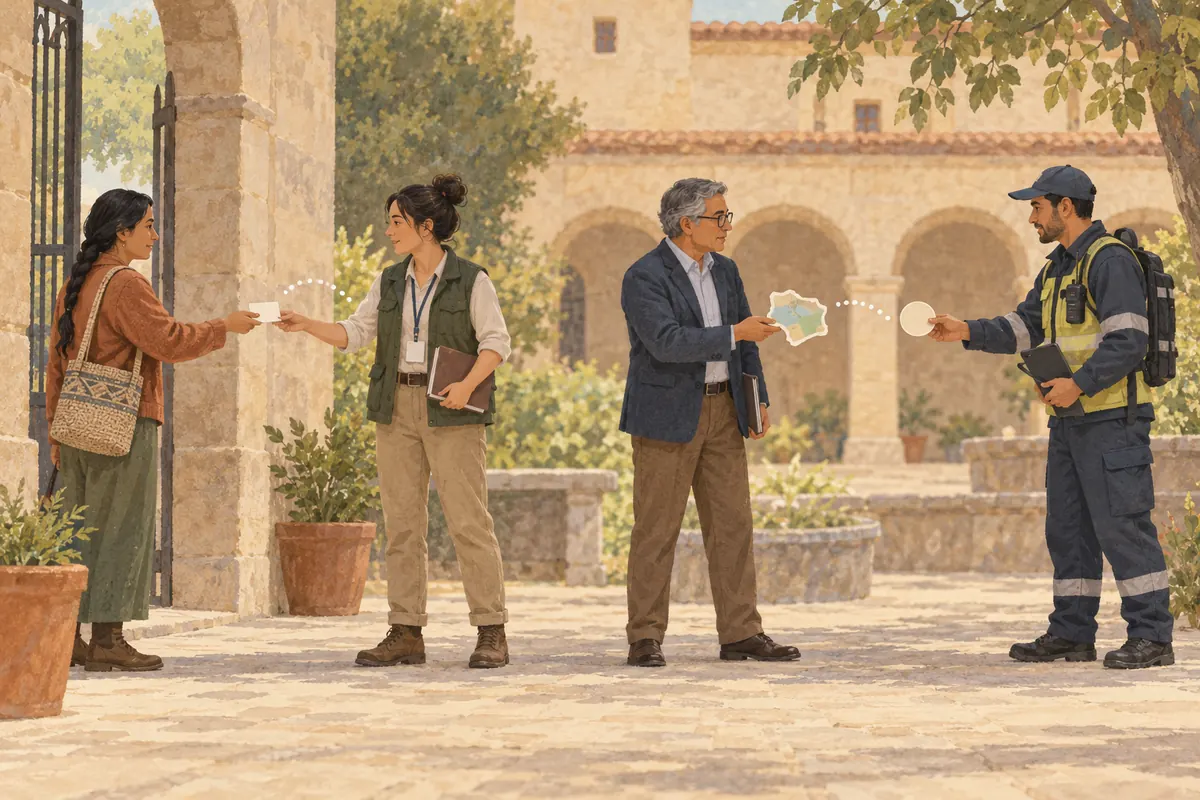
Separate the observer, coordinator, and authorized decision owner
UNESCO’s Convention for the Safeguarding of the Intangible Cultural Heritage recognizes the role of communities, groups, and individuals in producing, safeguarding, maintaining, and recreating heritage. It also says States Parties should identify and define heritage with the participation of communities and relevant non-governmental organizations. A local emergency plan can translate those principles into named responsibilities: the observer reports facts; a site or community contact consolidates information; an authorized owner decides which heritage-protection actions can be approved; and public emergency services retain their local command and life-safety responsibilities. The people with cultural knowledge should have a route to inform decisions, but a contact list does not itself grant consent or transfer community rights. Likewise, a heritage organization should not present itself as the incident commander for firefighting, evacuation, police access, or other public emergency operations. The right authority depends on local law and the incident plan.
Expert perspective: ICCROM’s framework is built around coordinated first aid
ICCROM’s 2018 toolkit describes a recurring problem in complex crises: local communities may be the first to try to safeguard their heritage but have limited capacity, while general responders may not know what is culturally important or how to handle it. Its handbook and toolkit offer adaptable workflows for reducing risk and supporting recovery with local communities, heritage custodians, emergency responders, and humanitarian actors. This is a practical framework, not a universal command chart that assigns the same authority in every country. A useful local interpretation is to write down who receives the first report, who checks site access and cultural context, who can authorize each protective measure, and who can request specialist or public-agency support. Those handoffs should be practiced before a crisis, including what happens when the usual contact is unavailable or when a decision belongs to a different agency.
A local plan can specify a backup route if the primary contact is unavailable, how receipt of a report is confirmed, and which role receives the next update. This is a locally chosen way to reduce communication gaps, not an international rule for every institution. Keep shared material to the location, access conditions, and verified status needed for that incident; check authority and consent before sending photographs or community records. Maintain contact and update details only for the roles and period needed for the response.
Every handoff should state what is known and when to report back
After receiving a report, the coordinator should record when it arrived and where it was forwarded, while keeping unverified assumptions separate from observed facts. A request for outside support should state the location, access conditions, observed damage, immediate human-safety concerns, community or custodian contact, and the specific decision or assistance needed. In an active incident, follow the designated public authority’s instructions; do not move heritage or release sensitive records without the relevant authority and consent. A sent message does not mean that a protective action has been approved. The contact chain should confirm receipt, name the person responsible for the next step, give a time for the next update, and identify decisions that remain open. UNESCO’s convention supplies an international framework for States Parties and community participation in intangible heritage; ICCROM’s first-aid resource addresses coordinated action for tangible and intangible heritage. Local legal powers, emergency numbers, and incident roles must still come from the current local plan.