Can Cultural Archive Materials Train AI? A Community Governance Checklist
Public access to a cultural archive does not automatically settle permission for AI training or redistribution. Check provenance, consent, community protocols, and operational controls before reuse.
Publication & corrections: infostoa · Editorial standards
Individual author and specialist reviewer information is not provided for this article.
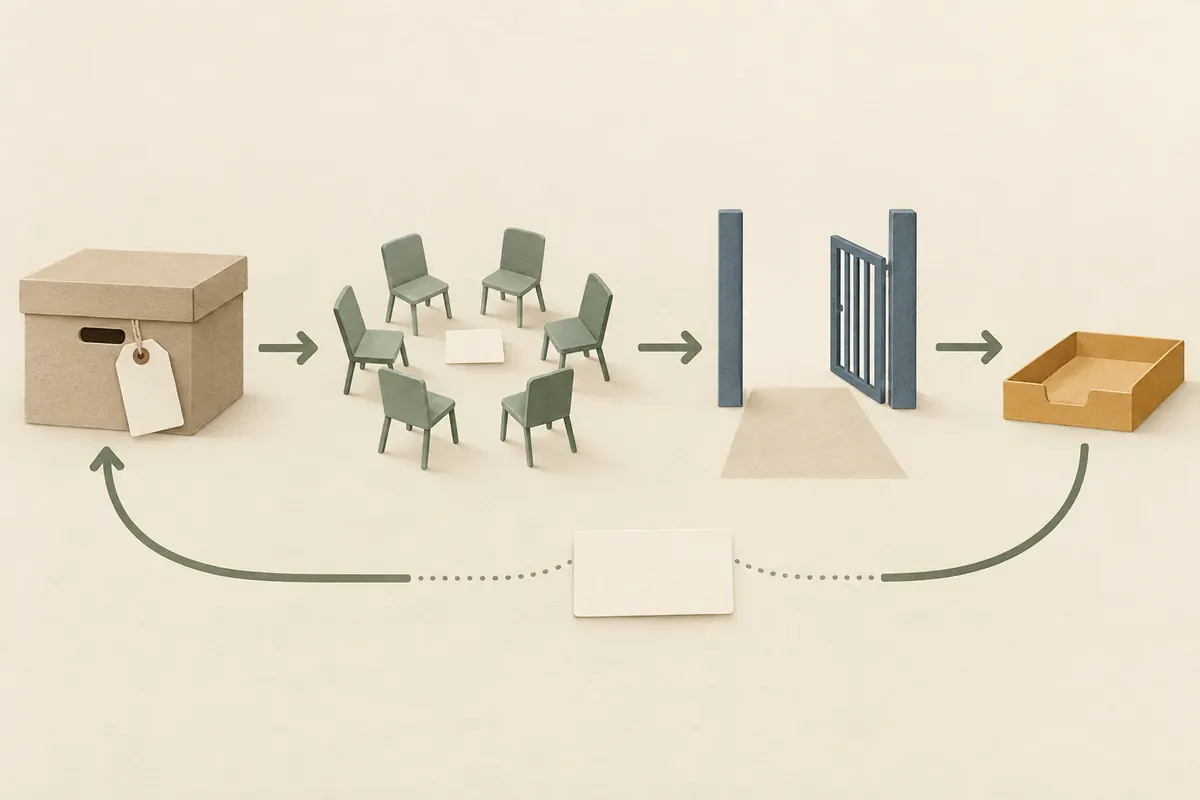
Public access does not answer every reuse question
A museum or archive may make a recording, photograph, or description available on the open web. That establishes access, but it does not by itself explain whether someone may download the material, combine it into a large dataset, train a generative model, or distribute commercial outputs. Cultural records can include knowledge about people, places, ceremonies, and relationships as well as the voice or image of an individual contributor. An older donation form may not have described machine indexing, large scale analysis, or model training in terms the contributor could assess. Treat viewing, copying, training, and redistribution as separate uses to investigate. This is a practical governance question; the answer for a specific collection depends on its documentation, applicable law, and the people with authority over the material.
Reconstruct provenance and the promises made
Start with the record behind the file. Identify who created it, who supplied or deposited it, who now stewards it, and why it was collected. Read the deed, consent form, interview agreement, and catalog notes for the scope of publication, reproduction, translation, commercial use, and transfer to third parties. If the wording is silent or ambiguous, do not convert public availability into a blanket permission. Ask the repository contact to trace the agreement and, where appropriate, consult the contributor or the relevant community authority. Removing names is not a universal solution: a voice, place name, rare event, or sequence of practices may still identify people or expose information that should not circulate. Document uncertainty instead of hiding it behind a generic “open” label.
Find community protocols and make them actionable
Look for statements about culturally specific access and use, including restrictions that may not be visible in ordinary copyright metadata. Local Contexts Traditional Knowledge Labels are designed to communicate community-specific protocols for cultural heritage circulating digitally outside its community context. Labels can help a reader recognize that material is community-use-only, non-commercial, culturally sensitive, or subject to another stated protocol. They provide context and a way to begin engagement; they are not, on their own, a copyright license, a complete legal determination, or proof that every relevant person has consented. The absence of a label does not establish unrestricted use. A repository should connect a label to a named contact, a process for requests, and a way to update access conditions rather than treating it as a decorative badge.
Expert perspective: apply CARE before building the dataset
In their peer-reviewed Data Science Journal article, Stephanie Russo Carroll and co-authors describe the CARE Principles for Indigenous Data Governance: Collective Benefit, Authority to Control, Responsibility, and Ethics. Their people- and purpose-oriented framing changes the first questions a project asks. Who is expected to benefit, and how will that benefit reach the people whose cultural material is involved? Can the relevant community shape the purpose and conditions of use or decline a proposed use? Who is accountable for errors, exposure, harmful outputs, and onward sharing? CARE does not decide whether a particular archive item is legally cleared, and it is not a substitute for consultation or permission. It is a governance lens for identifying whose authority and interests must be considered and for assigning responsibility before data move into a pipeline. If a project cannot identify an accountable steward or respond to a community request, postponing inclusion is a concrete safeguard.
Decide separately at each stage
A repository can assess on-site viewing, downloads, research copies, model training, and publication of outputs as distinct stages instead of bundling them into one “access” decision. Keep uncertain material in a restricted workflow while the relevant agreement and consultation are checked. Record which files and versions were approved, for what purpose, by whom, with what retention period, and under what limits on onward transfer. Set a review date and a contact route for corrections or requests to change access. Do not promise that material can always be recalled after copies have spread or a model has been trained; explain the practical limits before asking for a decision. If restrictions need to change, document why and communicate the effect to the contributors and communities concerned. These records make a decision inspectable and revisable rather than turning a one-time upload into a permanent, unexplained permission.