Corporate Bond Covenants: Read the Restrictions and Exceptions
Bond covenants vary by contract. Learn how to inspect debt tests, exceptions, default notices, and trustee procedures in the actual indenture.
Publication & corrections: infostoa · Editorial standards
Individual author and specialist reviewer information is not provided for this article.
The contract matters more than the label
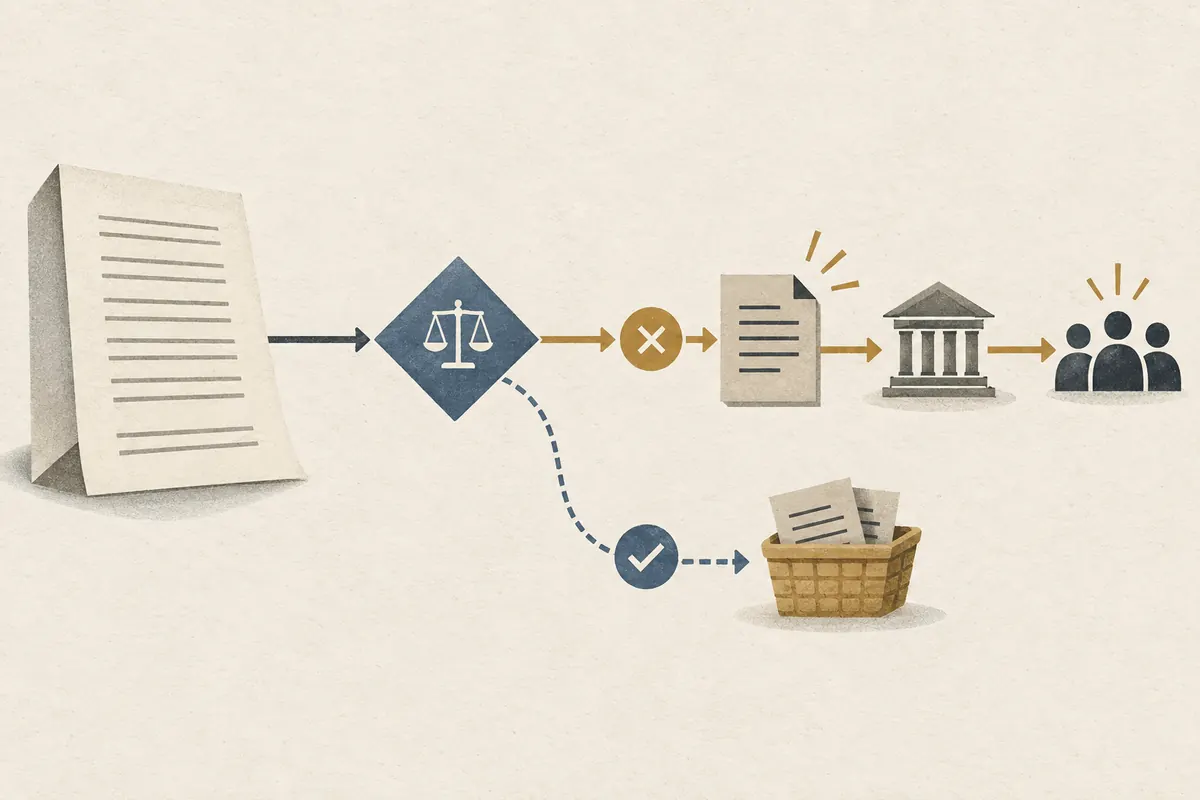
A covenant is a contractual condition intended to manage creditor risk by requiring an issuer to do something or limiting what it may do. Corporate bonds do not all carry the same covenant package. Wording and exceptions vary with the issuer, collateral, maturity, transaction structure, and negotiations. The mere presence of a covenant does not mean bondholders can always stop additional borrowing.
The SEC’s investor bulletin says an indenture may restrict additional debt or require financial ratios. A breach may constitute a default, and a trustee can have monitoring and remedy-related responsibilities. That general explanation is not a substitute for the operative language of a particular bond. Readers should inspect the relevant indenture and disclosures rather than infer protection from a product label or summary alone.
Separate affirmative duties from restrictions
Affirmative covenants can require actions such as reporting, recordkeeping, or paying taxes. Restrictive covenants may condition additional debt, liens on specified assets, asset transfers, or other transactions. The labels are only a starting point: definitions determine whether subsidiaries are covered, what counts as debt or collateral, and which exceptions apply. A clause that appears broad in a summary may contain negotiated exclusions in the actual contract.
An incurrence covenant commonly tests a condition when an issuer proposes new debt or a covered transaction. A maintenance covenant may require a financial test to be met periodically, whether or not a new transaction is proposed. This difference affects when a test can constrain the issuer. Check the testing date, calculation method, and whether the test is consolidated across entities; similar-sounding provisions can have materially different triggers.
Read the formula, baskets, and cure process
Do not stop at a stated ratio or debt limit. Review the items included in the calculation, the measurement period, currency conversion, entity scope, and any pro forma adjustments. An indenture may define exceptions or baskets for particular debt, liens, or transfers; several baskets may interact. The actual contract controls, so “the bond has a leverage covenant” is not enough to compare the protection offered by two issues.
A breach does not automatically produce repayment or recovery. The agreement may specify notice, a cure period, voting thresholds, trustee authority, and remedies such as litigation or acceleration. The SEC bulletin describes trustee monitoring and enforcement roles at a high level, while the specific powers, duties, and bondholder procedures depend on the indenture and applicable law. Read the definitions, notice, waiver, and remedies provisions together.
Worked hypothetical: passing one ratio is not full permission
This is a made-up calculation exercise, not language from an actual bond. Suppose a fictional incurrence covenant allows new debt only if pro forma net leverage—defined here as contract-defined net debt divided by contract-defined EBITDA—is no more than 4.00x. Existing net debt of $210 million and EBITDA of $60 million equal 3.50x. If a proposed $20 million borrowing is all added to net debt, with no other adjustments, the ratio becomes $230 million ÷ $60 million = 3.83x, below the assumed limit. If EBITDA instead falls to $55.2 million, the same debt produces about 4.17x and fails this hypothetical test. The actual indenture may define EBITDA add-backs, cash netting, entity scope, baskets, other conditions, and testing mechanics differently. Passing this ratio alone does not establish that the borrowing is permitted. All amounts and the 4.00x threshold are invented solely to show the calculation.
Expert perspective: keep the research population in view
In Dallas Fed Research Department Working Paper 2311 (August 2023), Falk Bräuning, Victoria Ivashina, and Ali Ozdagli study high-yield debt covenants and their real effects, including leveraged-loan evidence on incurrence restrictions. The authors state that their views do not necessarily represent the Dallas Fed or the Federal Reserve System. The research is useful for understanding how contract design can affect corporate choices. Its sample and period are bounded, however; it should not be presented as proof that every public bond indenture has the same terms or that a particular asset-transfer strategy is common across bonds.
For a careful comparison, record the issuer and instrument, contract date, collateral, test type and timing, definitions, exceptions, cure period, trustee role, and the page supporting each observation. A qualified adviser can help assess legal interpretation and financial risk for an individual issue. This guide explains how to read provisions; it does not rate a bond or promise an investment outcome. Record the filing date and amendment version too, so a summary is not mistaken for the currently governing text.