What Should Be Saved First? A Community Led Heritage Emergency Priority List
For a small cultural organization, emergency planning begins by agreeing on what matters and to whom, not by buying equipment. Learn how to connect safety, feasible action and recovery.
Publication & corrections: infostoa · Editorial standards
Individual author and specialist reviewer information is not provided for this article.
Evacuate people first, then make decisions
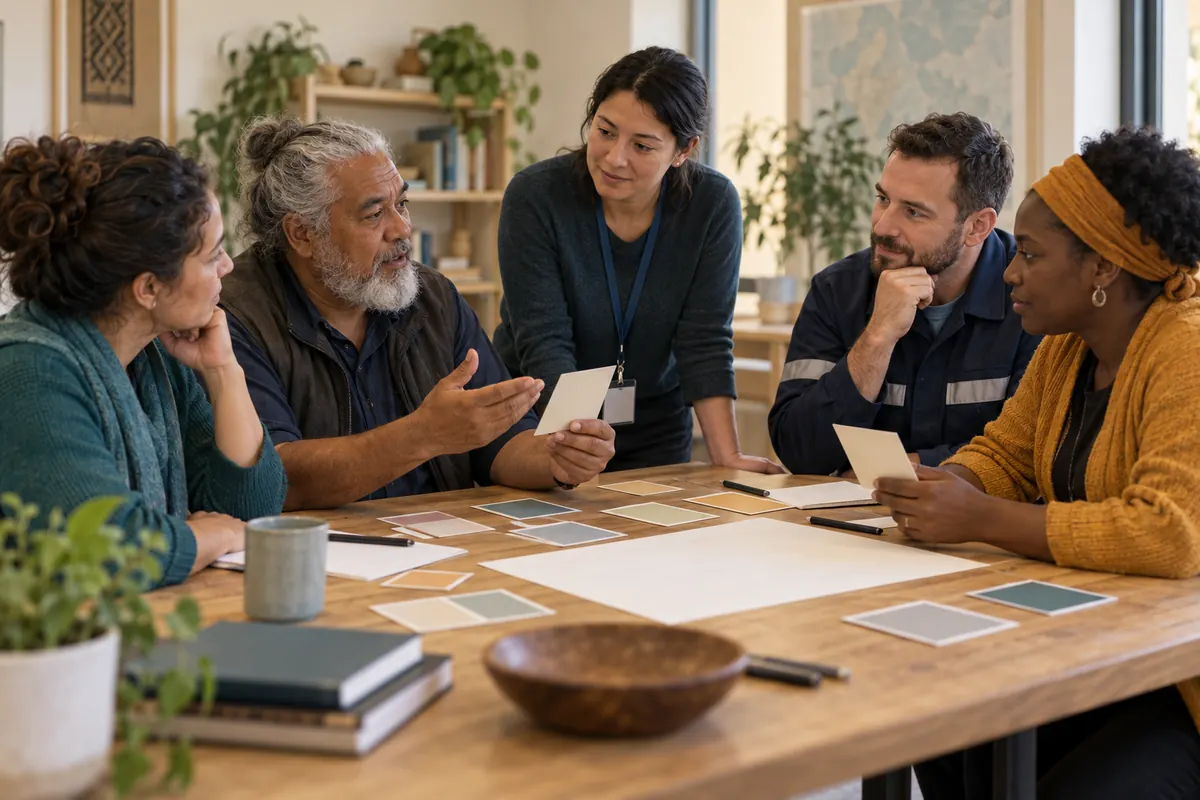
When a fire or flood warning arrives, human safety comes before collections and records. No one should reenter a dangerous area to rescue heritage, or ask an untrained volunteer to move a heavy object. A priority list therefore supports, but never replaces, evacuation procedures and instructions from emergency responders. It records decisions made in advance about what can be protected, and in what order, after people are safe. A small museum, community hall, religious center or festival group may care for objects, places and practices tied to many different people and memories. Since no team can save everything at once, agreed criteria can reduce confusion and improvised decisions under pressure.
Consider relationships and recovery, not price alone
If a list ranks items only by market value or age, it can miss what the community actually needs. An irreplaceable oral recording, a tool used to teach the next generation, an object used in an annual observance, and records connected to another place may each matter for different reasons. Conversely, an apparently precious object may be fragile to move or require equipment and trained people who are unavailable. For each item, record its meaning and use, condition, size and handling cautions, whether a substitute exists, and who helped make the decision. Priority is not a contest to identify the most expensive object. It is a choice that reduces loss and supports recovery with the time and safe capacity available.
Practitioner perspective: make cooperation and capacity part of the plan
ICCROM’s handbook introduction says that local communities are often first to try to safeguard heritage when disaster strikes, while their ability to intervene may be limited; coordinated planning among institutions, experts and local organizations is needed. This practitioner perspective is a reason to treat the list as more than a checklist. It should connect to whom to contact, who can authorize access, what can safely be done before responders arrive, and which tasks require specialists. Community members should take part in decisions without being made responsible for dangerous structural, electrical or contaminated-site work. Assigned roles must match the people and training the organization actually has.
Living heritage cannot be planned through an object inventory alone
UNESCO’s 2003 Convention for the Safeguarding of the Intangible Cultural Heritage does not define safeguarding as documentation or preservation alone. It describes a process that includes identification, documentation, research, preservation, protection, promotion, transmission and revitalization to ensure viability. Applied to emergency planning, this means that rescuing instruments or costumes while forgetting the people and knowledge that make and use them leaves the plan incomplete. Ask whether a practice could move to another venue if its usual place is damaged, whether materials would still be available, who holds oral knowledge and contact networks, and what is needed to gather again. The convention’s broad idea of safeguarding does not impose one identical checklist on every community. Local decision processes and differing views belong in the plan.
Five steps a small organization can take now
First, check evacuation and emergency contact procedures before any heritage rescue plan. Second, make an inventory with community members and record why each object or practice matters. Third, distinguish handling instructions from items marked “do not move” to prevent avoidable damage. Fourth, keep site photographs, contacts and support details for building managers, insurers and conservators in a safe, accessible place. Fifth, run a brief exercise with the actual people and time available, then fix gaps such as unreachable contacts or unassigned roles. Review the list after a move, staff change, new event or new acquisition rather than locking it away once completed. Measure success by more than the number of objects removed. The central question is whether the plan protects people while preserving a path for the community to restore the cultural relationships it chose to sustain.
A priority list is not authorization to make rescue decisions at a scene. Follow evacuation and incident-command instructions first, and address only items responders have deemed safe to reach. Useful advance fields include location and identification cues, handling hazards, protective equipment, keys and contacts, and a safe temporary holding place. If private property or sensitive ceremonial knowledge is listed, agree on access with the community. After triage, record who decided, what was deferred, and what risk remains, so a later shift can follow the reasoning rather than unknowingly reverse it.