Does Cold Brew Really Have More Caffeine? What Brewing Changes
What cold-brew research and EFSA guidance say about roast, grind, steep time, and why a brewing label cannot determine the caffeine in your cup.
Publication & corrections: infostoa · Editorial standards
Individual author and specialist reviewer information is not provided for this article.
The same coffee can deliver different amounts of caffeine
Caffeine in a cup is not set by a bean name or cup size alone. Bean variety and dose, roast, grind, water-to-coffee ratio, brewing method, and contact time all matter. There is no reliable universal rule that espresso must contain the most caffeine per serving because it tastes concentrated, or that cold brew must always contain more because it steeps longer. Strength describes concentration in a sip; total caffeine in a serving also depends on how much beverage is served and how much caffeine was extracted.
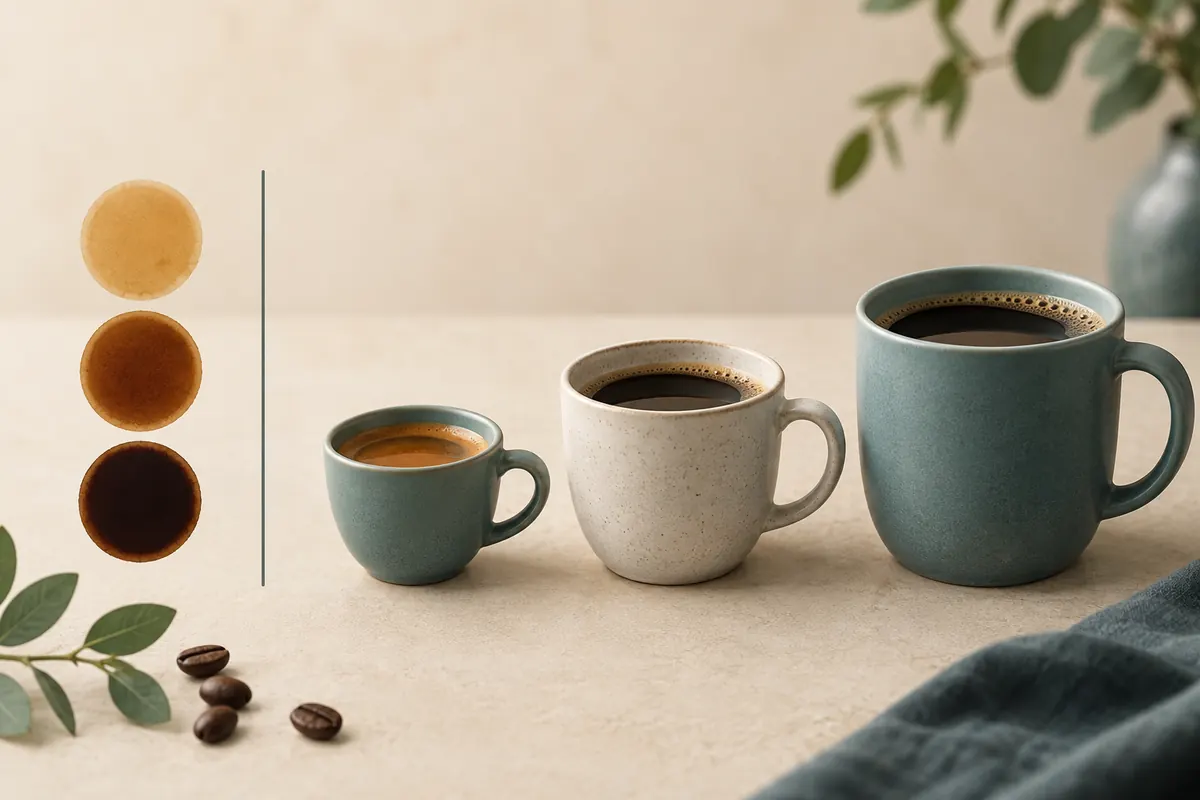
The European Food Safety Authority (EFSA) explains that caffeine concentrations in beverages depend on manufacturing, bean type, and preparation method, including drip coffee and espresso. A menu label therefore cannot tell you an exact dose. Two drinks with the same name can differ when recipes, equipment, or serving sizes differ between cafés and home kitchens.
Does a longer steep keep extracting caffeine indefinitely?
A 2017 Scientific Reports experiment by Megan Fuller and Niny Z. Rao compared four cold-brew combinations: medium or dark roast with medium or coarse grind. Under the tested conditions, the researchers observed caffeine concentrations approaching equilibrium after about six to seven hours. This describes those beans, ratios, temperatures, and methods; it does not promise that every cold-brew recipe is finished at that time or that later changes are impossible.
In this experiment, the medium-roast samples had higher caffeine concentrations than the dark-roast samples, while grind size did not significantly affect caffeine concentration in the tested cold brews. Coarse-ground cold brew samples had substantially higher caffeine concentrations than their hot-brew counterparts in the comparison. These are useful observations, not a formula to apply to every coffee. Extraction is the result of interacting variables, so changing a single brewing habit may not produce the same result with another bean or recipe.
Expert perspective: separate a lab result from your daily cup
EFSA’s caffeine assessment discusses intake in the context of total exposure and timing. It notes that a single 100 mg dose may affect sleep duration or patterns in some adults, particularly close to bedtime. That does not mean everyone responds identically, nor does EFSA certify the caffeine content of a particular cup. The cold-brew study describes a limited experimental setup; EFSA’s material concerns exposure from multiple foods and drinks. Read together, they support a practical conclusion: estimates for an individual homemade cup are uncertain, and daily intake can also include tea, chocolate, and energy drinks.
How to compare brews at home
For a useful comparison, keep the bean and roast batch, coffee mass, water ratio, and final serving volume consistent. Record grind, water temperature, and steep time. Changing one factor at a time makes flavor and extraction differences easier to interpret. A stronger taste alone does not prove a higher caffeine dose. If a precise intake matters, prefer verified product labeling or data from the manufacturer, and treat an unmeasured home-brew estimate as approximate.
Limits and personal context
The paper used a small set of beans and controlled brewing conditions; it did not measure every café drink. EFSA’s guidance reflects European consumption data and a general-population risk assessment. Individual sensitivity, pregnancy or lactation, medical conditions, and medicines are not settled by a general assessment. If caffeine causes sleep problems, palpitations, or other discomfort, consider reducing the amount or changing the timing, and seek individualized health advice from a qualified professional.
Keep concentration (mg/L) separate from the amount in a serving (mg). Serving volume changes the amount delivered; ice or milk can dilute the drink but does not remove caffeine already extracted.
The study’s nonsignificant grind-size result means that it did not detect a difference under those tested samples and conditions. It does not prove that every bean or home recipe behaves identically, and a taste comparison is not a caffeine measurement.