Chronic Rhinosinusitis With Nasal Polyps: Phenotype and Endotype
Separate the visible nasal-polyp phenotype from eosinophilic or type 2 inflammatory pathways, and understand what those patterns can and cannot establish.
Publication & corrections: infostoa · Editorial standards
Individual author and specialist reviewer information is not provided for this article.
Chronic rhinosinusitis with nasal polyps does not describe one uniform inflammatory disease. Polyps are a clinical phenotype seen on examination; type 2 or eosinophilic inflammation describes an underlying immune pattern. They can be related, but the terms are not interchangeable, and a phenotype alone does not identify an individual patient's endotype.
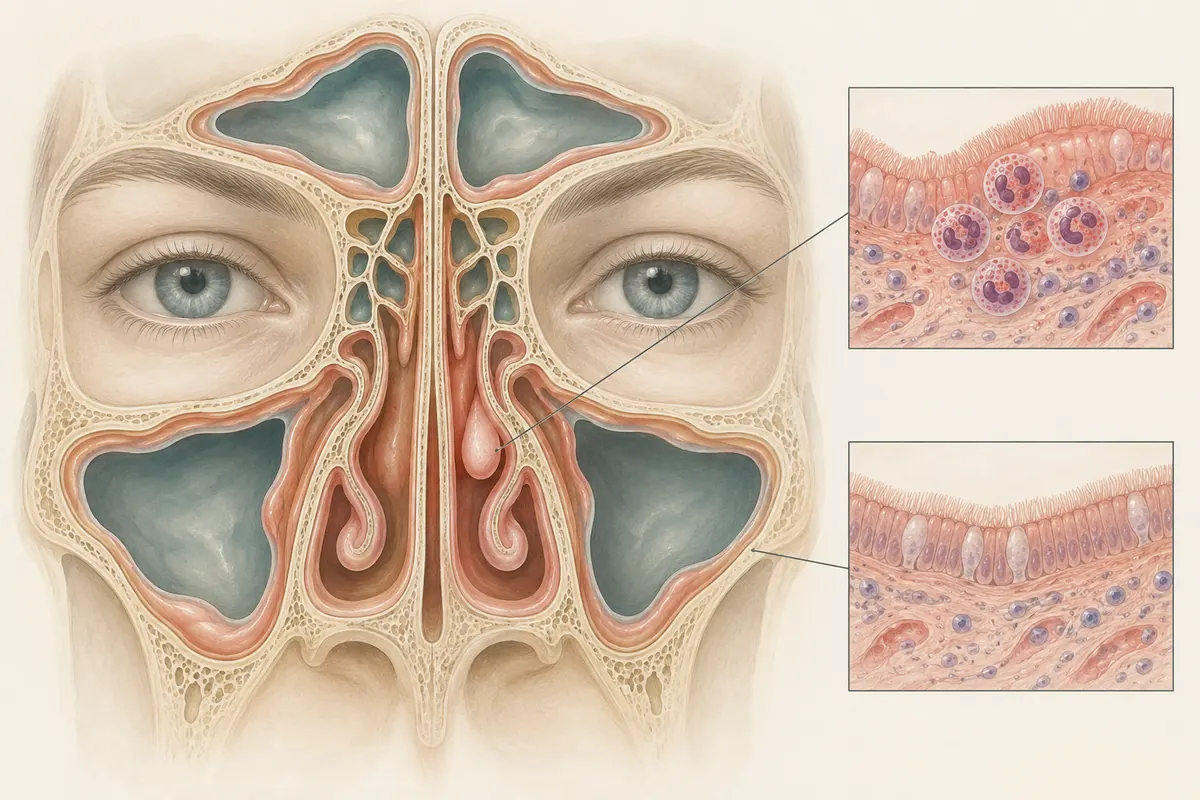
1. Symptoms and objective findings belong together
AAO-HNSF’s 2025 adult surgical FAQ describes checking key symptoms lasting at least12 weeks together with inflammation on nasal examination, endoscopy or CT. One symptom—blockage, drainage, facial pressure or reduced smell—does not establish the diagnosis. This resource concerns adults considering surgery, not an all-age self-diagnostic checklist.
2. A polyp is a phenotype, not a complete mechanism
A phenotype is the observable presentation: in this case, whether nasal polyps are present. An endotype attempts to describe the biological pathway contributing to inflammation. The distinction matters because people with the same visible phenotype may have different mixes of inflammatory activity, and more than one endotype may coexist in the same person. Research classifications also depend on the tissue sampled, the tests used, and the population studied. Therefore, “nasal polyps equal type 2 disease” is too absolute. The visible finding does not by itself prove which immune pathway is active or predict how one person will respond to treatment.
3. What type 2 and eosinophilic inflammation mean
The 2025 specialist review describes type2 pathways involving IL-4, IL-5, IL-13, IgE and eosinophils. Associations with asthma or NSAID-exacerbated respiratory disease do not establish an individual diagnosis. Endotypes can coexist, and no single profiling method is universal in clinical practice. Region, sample and testing differences prevent converting a study percentage or blood value directly into an individual’s endotype or treatment response. This is a synthesis of biology, not a new trial or a personal treatment guideline.
4. A record and questions for the appointment
Separate “symptom onset and duration / blockage, drainage and smell changes / sleep and daily-life effects / original endoscopy or CT findings and date / medicines, duration and response / asthma and NSAID-reaction history.” A fictional entry, “reduced smell12 weeks; spray name and duration pending; endoscopy report unavailable,” confirms neither polyps nor type2 inflammation. Bring packaging and prior reports and ask whether symptoms match objective findings and how prior treatment is assessed. Do not take an NSAID yourself to test for a reaction.
AAO-HNSF’s key-action summary assesses surgical candidacy using symptoms, disease characteristics, quality of life and prior treatment. It advises against one predefined medical regimen or duration as a prerequisite for every adult. Reaching a period found online does not automatically qualify or disqualify someone for surgery.
5. Confirm the plan beyond surgery
The same summary calls for discussing recurrence, long-term medical management and follow-up expectations. Ask what care remains for your disease pattern rather than assuming surgery ends all medicines. NHS’s polyp guide advises assessment for worsening symptoms or smell changes and explains that polyps can regrow after surgery. The polyp label alone cannot choose a medicine, dose or operation.