Cataract and Lens Protein Clumping: Opacity, Symptoms, and Examination
How clumping of lens proteins can create clouding, what vision changes may occur, and how eye specialists assess cataracts, with limits on molecular and treatment claims.
Publication & corrections: infostoa · Editorial standards
Individual author and specialist reviewer information is not provided for this article.
A cataract is clouding of the lens, and its effect on vision depends on where and how much clouding occurs. Timing is discussed with an eye clinician based on examination and daily function.
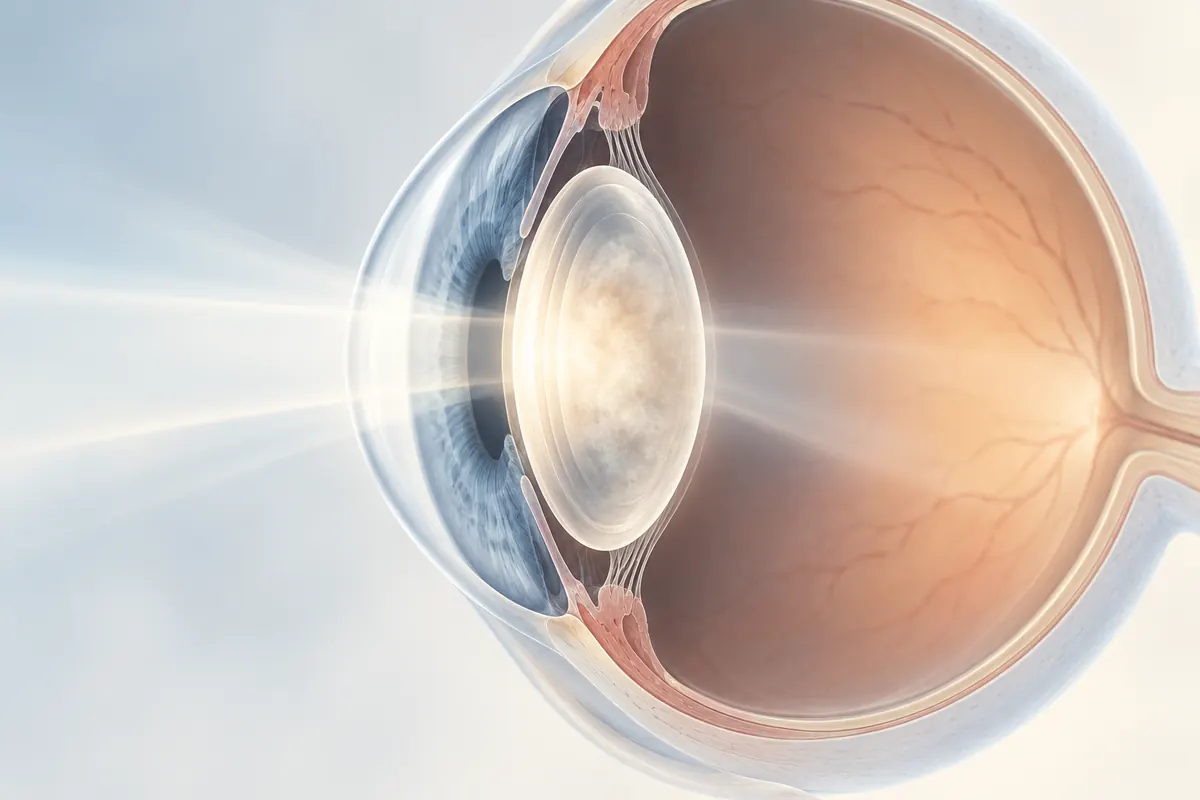
1. A cataract is clouding of the lens
A cataract is a cloudy area in the transparent lens that helps focus light inside the eye. The National Eye Institute (NEI) explains that as people age, proteins in the lens can break down and clump together, forming a cloudy area. This general description does not verify every molecular pathway sometimes attached to the term “crystallin.” This article stays with what the reviewed sources establish; it does not claim a specific protein subtype, sequence of oxidative reactions, or personal rate of progression.
2. How clouding can affect vision
A mild cataract may cause no noticeable symptoms at first. As clouding increases, vision may become blurry or hazy, colors may look faded, night vision may become difficult, and lights may seem too bright or produce halos. Double vision can also occur. NEI notes that these changes may have other causes, so a symptom list is not a self-diagnosis tool. Difficulty with everyday tasks or a changing glasses prescription can prompt an eye examination, but neither by itself confirms that a cataract is responsible.
3. Expert perspective: what specialist material adds
NEI provides a public-health overview of cataract causes, symptoms, examination, and treatment. The cataract chapter in Merck Manual Professional is a clinical reference written by ophthalmologist Leila M. Khazaeni, MD, and peer reviewed by Sunir J. Garg, MD, FACS. It defines cataract as lens opacity and describes assessment with ophthalmoscopy and slit-lamp examination. Read together, the pages distinguish a public explanation from ophthalmology-focused clinical reference material. Neither source can diagnose an individual reader.
4. Examination cannot be replaced by symptoms
An eye-care professional may dilate the pupil to inspect the lens and other structures in the eye. Blurring or glare can be useful to report, but neither is unique to cataract. A sudden change in vision should be discussed promptly with a health professional rather than assumed to be an age-related cataract. If clouding is found, the clinician also considers its location and extent, visual function, and other eye conditions before discussing next steps.
5. Treatment timing depends on individual impact
NEI explains that surgery is the way to remove a cataract, while also noting that surgery does not always need to happen immediately. If clouding interferes with activities such as reading, driving, or watching television, a person can discuss the benefits and risks with an ophthalmologist. Brighter lighting or an updated glasses prescription may help with some early difficulties, but neither removes the cloudy lens. This article does not set an individual surgery date, promise an outcome, or replace an eye examination and professional advice.
Tell the clinician which activities have become difficult and whether lighting or glasses still help; these details add context to the examination, but do not set surgery timing by themselves. During surgery, the cloudy lens is removed and replaced with an artificial lens.
6. Turn ‘poor vision’ into an activity record
Before a visit, note the task, lighting conditions and difficulty remaining with your current glasses. Fictional entries might read ‘small print is blurred at the evening dining table, but readable under brighter lighting’ and ‘headlight glare makes night driving difficult, so I am currently not driving at night.’ Add when the change began and whether it affects one or both eyes. Do not deliberately repeat an unsafe activity to document it.
This is not a score for cataract severity or surgery eligibility. It helps discuss examination findings, other eye conditions, current limitations and difficulties remaining after glasses or lighting changes. Useful questions include: ‘Does cataract explain this limitation?’, ‘When should we reassess if we observe it?’ and ‘What are the expected benefits, risks and help needed during recovery?’