What Rinsing Changes in Canned Beans
Rinsing may remove some sodium, but the change depends on the product and recipe. Learn how to read the label and decide whether to keep the packing liquid.
Publication & corrections: infostoa · Editorial standards
Individual author and specialist reviewer information is not provided for this article.
The practical answer: rinsing can remove some sodium
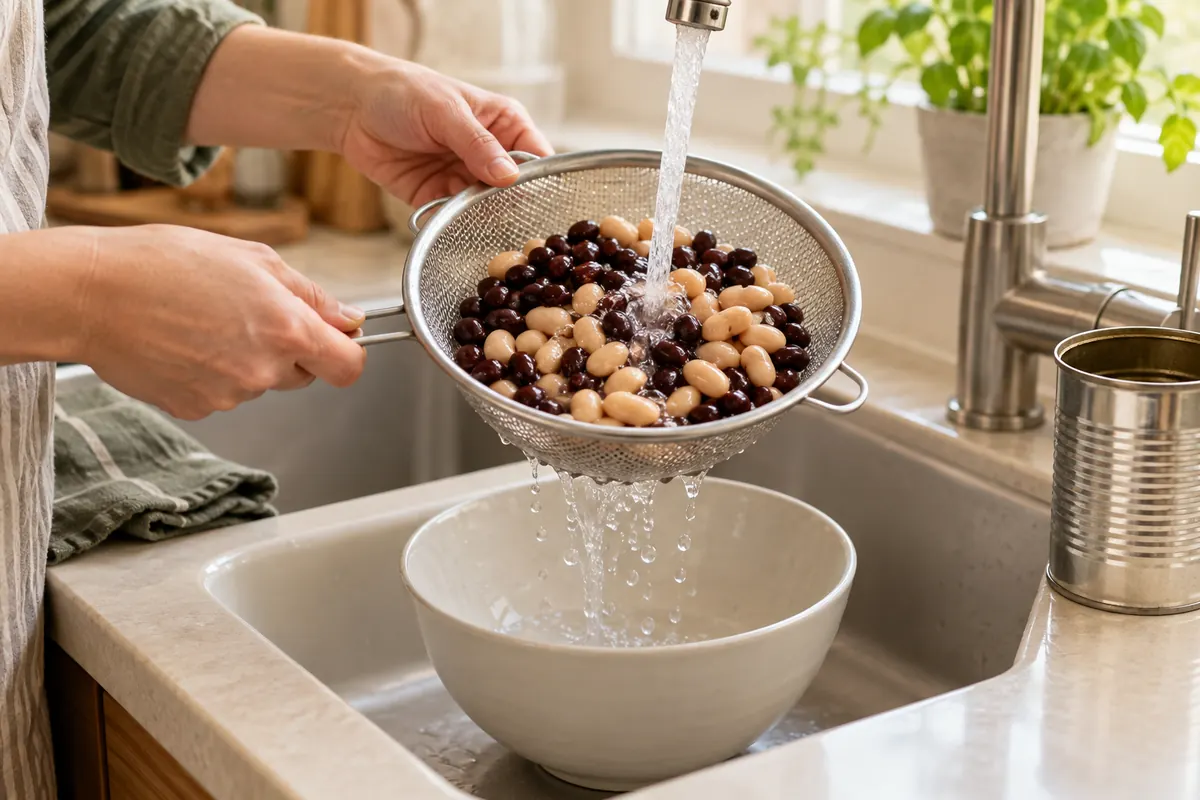
Draining canned beans and rinsing them under running water can remove some sodium. The U.S. Food and Drug Administration includes rinsing sodium-containing canned foods, including beans, among practical ways to reduce sodium. That general advice does not provide a bean-specific reduction percentage. Products differ in bean variety, processing, packing liquid, and serving basis, so one measured result should not be applied to every can.
This is a cooking and label-reading guide, not a treatment plan or individualized nutrition prescription. If a clinician has given you a specific sodium limit, use the serving information on the product and the amount you actually eat when discussing it with them.
What changes when you use the liquid too
A recipe that includes the canning liquid starts from a different ingredient mix than one that uses drained beans alone. Discarding the liquid and rinsing can wash away some sodium-containing liquid on the bean surface, but it does not make the beans sodium-free. The amount in a meal still depends on the product and the portion served.
For salads, grain bowls, and other dishes that do not call for the canning liquid, draining and rinsing may fit the recipe naturally. In soups and stews, the liquid can affect flavor and texture. You can decide whether to keep it, choose a no-salt-added product, or adjust other salty ingredients. The right choice depends on the dish and the nutrition goal.
Why the label matters more than a universal percentage
Nutrition labels describe a stated serving, but products may differ in whether the serving refers to drained solids or includes liquid. The can’s net weight, drained weight, and the amount you eat are not automatically interchangeable. Before comparing two labels, check that you are comparing the same serving basis. A change in drained weight also makes it difficult to estimate your intake by comparing label numbers alone.
Bean varieties, processing, added salt, and packing liquid vary. A sentence such as “rinsing always removes a fixed percentage” can therefore mislead someone choosing a different product. Start with the product’s label, and do not treat draining or rinsing as a precise measurement of the sodium left in that particular serving.
Expert perspective: rinsing also changes the cooking liquid
When liquid is discarded, some water-soluble components can go with it. A Tufts nutrition expert notes that some water-soluble vitamins and minerals, including folate, may leach into the liquid. This does not mean rinsed beans lose all nutritional value. It means the cooking liquid and beans are parts of the same ingredient, and the recipe determines whether keeping that liquid is useful.
If a recipe relies on the liquid, a reduced-sodium or no-salt-added product may be another option. If lowering sodium is the priority and the liquid is not needed, draining and rinsing may be reasonable. Check other contributors too: broth, sauces, seasoning mixes, and added salt can all affect the finished dish.
A simple shopping and cooking routine
First look for “no salt added” or reduced-sodium options and compare labels using the same serving basis. For a dish that does not use the canning liquid, drain the beans in a strainer, rinse with clean running water, and let excess water drain away. The sources cited here do not establish one mandatory household rinse time or water volume, so this article does not prescribe one.
For a soup or stew, check the label and taste the recipe before deciding whether to keep the packing liquid. When several ingredients are combined, the beans’ label alone does not describe the sodium in the finished meal. Rinsing is a practical way to remove some sodium, not a guarantee of a particular amount; choose the product and preparation that fit the recipe and your needs.
When reading a label, check whether its stated serving resembles the amount you will actually eat. If a recipe combines more than one can, the ingredient amounts add up across products. Decide about rinsing based on the recipe and your goal; do not write down a precise reduction that the available evidence cannot establish for your can.
Sources and references: FDA: Sodium in Your Diet, UF/IFAS Extension: Beans and legumes, Tufts nutrition expert: Rinsing canned beans