Atopic Dermatitis and the Skin Barrier: Moisture Loss and Care Limits
How barrier changes relate to moisture loss and the itch–scratch cycle, and what specialist guidance supports about care and its limits.
Publication & corrections: infostoa · Editorial standards
Individual author and specialist reviewer information is not provided for this article.
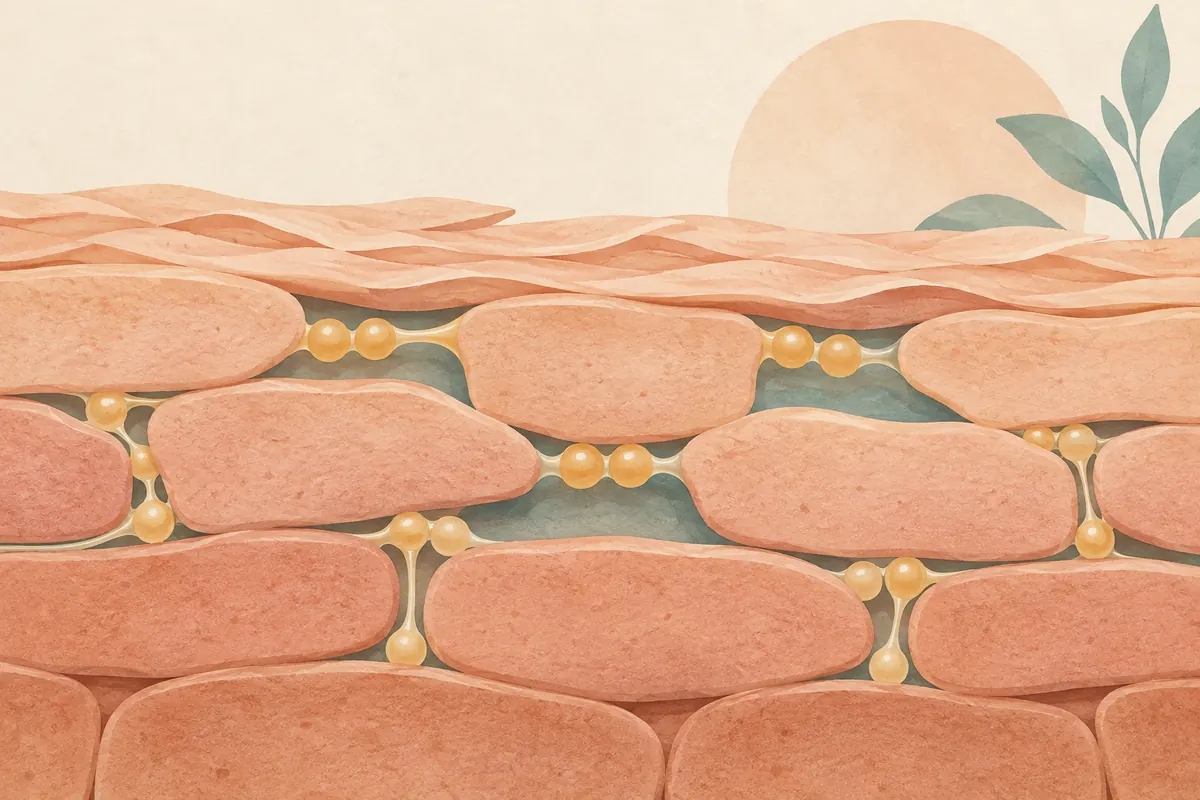
Atopic dermatitis is an inflammatory skin condition associated with itch. The U.S. National Institute of Arthritis and Musculoskeletal and Skin Diseases (NIAMS) explains that changes in the skin’s protective layer can cause moisture loss and dryness. Genes, immune-system problems, and environmental exposures may contribute to barrier changes, but this evidence does not identify an individual’s cause.
NIAMS describes a possible cycle: inflammation triggers itch, scratching causes further skin damage, and the added damage can increase inflammation and itch. This does not reduce the condition to one ingredient. The source does not establish that ceramide deficiency explains every case or that a particular ceramide product treats atopic dermatitis.
Ceramide research is not a product comparison
A 2025 Experimental Dermatology review describes ceramides as lipids involved in the skin moisture barrier, alongside cholesterol and fatty acids. A barrier mechanism does not establish one product’s superiority or ceramide deficiency in every patient. A product name or “barrier repair” label cannot replace prescribed care.
Match care guidance to the person
AAD’s self-care guidance focuses particularly on childhood eczema. It discusses considering thick creams or ointments and fragrance-free options, without identifying one product for everyone. Choose with the existing plan and skin condition in mind. If stinging or worsening recurs, bring the product and ingredient list to a clinician. Use prescribed medicines as directed; changing several products at once makes the sequence harder to describe.
A usable one-line symptom entry
For example: “16 October evening / elbow crease / woke twice itching / new cream A / prescription used as directed / photo1016.” This is fictional, not a finding that the cream caused the awakenings. Record product changes and other changes without labeling a suspected cause as proven. The diary does not decide whether to eliminate foods, stop medicines or obtain allergy tests.
Questions for a clinical visit
Moisturizing and reducing irritation do not resolve every flare. If symptoms persist or disrupt sleep and daily life, ask how prescribed medicines and moisturizers fit the current plan and which changes warrant contacting the clinician. Applying barrier research to an individual requires assessment of symptoms, infection and response to care.