Lost, Delayed or Damaged Checked Bags: Claim Deadlines and Evidence
A practical guide to documenting a baggage problem, notifying the airline in writing and understanding the limits of international air-carrier liability.
Publication & corrections: infostoa · Editorial standards
Individual author and specialist reviewer information is not provided for this article.
Report the problem before leaving the airport
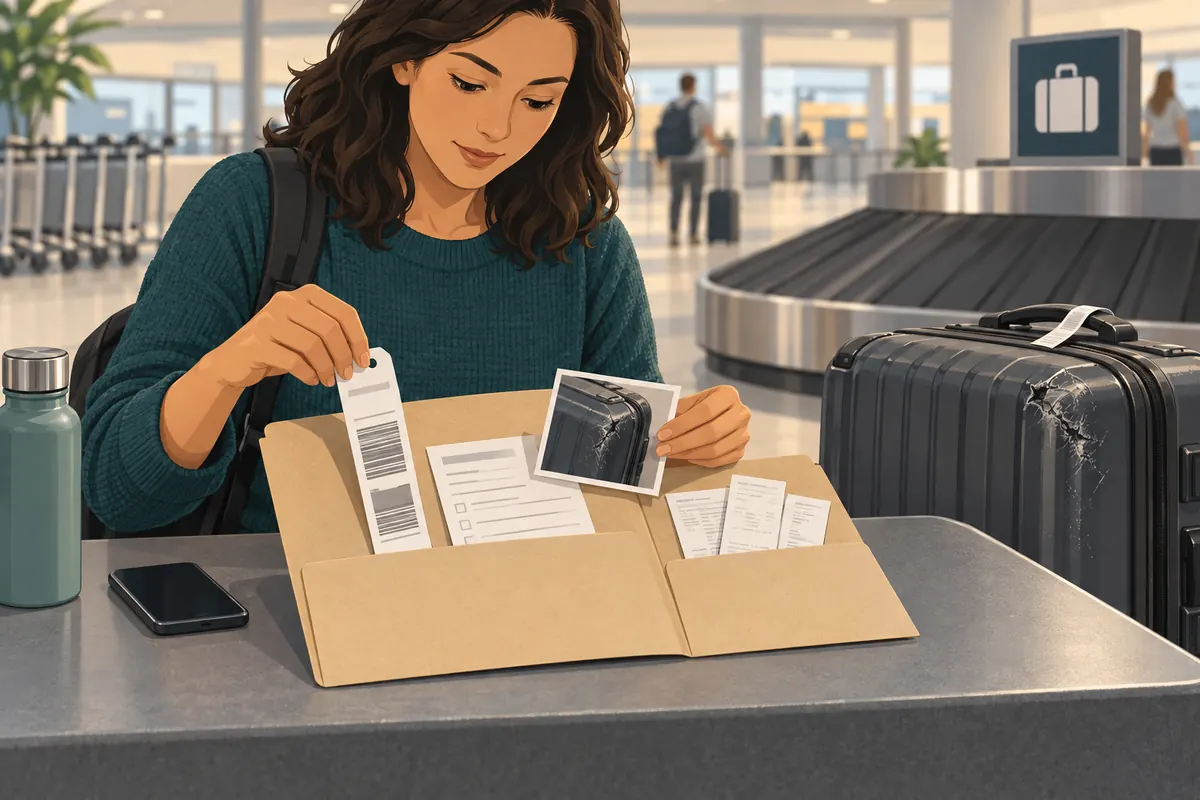
If a checked bag does not arrive or appears damaged, tell the airline’s baggage desk before leaving the arrivals area. Ask for a Property Irregularity Report (PIR) or equivalent case reference, and note the airport, operating carrier, arrival date, booking reference and bag-tag number. Photograph the entire bag, its tag and any damage; if contents are affected, photograph the items and keep relevant packaging. A PIR records that you reported a problem. It should not be assumed to approve compensation or replace a separate written claim. Check the airline’s own claim channel, submit through it as well, and keep a copy of the form, attachments, confirmation screen and emails. If the desk is closed, use the carrier’s online channel promptly and retain evidence of when it was sent.
Delay, loss and damage lead to different questions
A delayed bag may later arrive; loss and damage involve different facts. ICAO’s convention overview describes carrier liability for checked baggage in its charge and liability with exceptions for delay. Check the itinerary and governing law. Neither new replacement value nor the cost of a whole holiday is automatic. Link necessary purchases to receipts and retain damaged bags and contents for assessment.
Separate written notice for damage, delay and loss
The Canadian Transportation Agency distinguishes damage claims within seven days of receipt, delay claims within 21 days of receipt, and loss claims as soon as possible. It describes loss after a 21-day delay or earlier airline admission. This is Canadian jurisdictional guidance, not a universal rule for every itinerary. Do not apply “seven days after receipt” to every lost bag. Report a missing bag now and check further claim steps.
Record receipt, discovery and written-submission dates separately. A PIR alone need not complete a claim. Notify promptly while checking the applicable rules, airline process and relevant authority. Written-notice and court-action deadlines are separate.
CAA specialist guidance: organize a checkable claim file
As a practical interpretation of the cited guidance, a useful submission lets someone reconstruct the event without guessing. Keep the itinerary and boarding pass, baggage tag, PIR reference, delivery record, dated photographs, repair assessment, receipts and every airline response together. Add a short chronology: when the bag was checked, when the problem was reported, when it was delivered or declared lost, and when each written claim was sent. For each amount requested, identify the item or expense, explain its connection to the incident and attach supporting evidence. Avoid presenting a new retail price as the automatic value of a used item, and do not discard a damaged bag until the carrier has had a reasonable chance to inspect it. This orderly record cannot guarantee acceptance; it helps separate documented loss from estimates or unrelated spending. Rules and complaint routes differ by itinerary and jurisdiction, so verify that the Montreal framework described here applies to the particular carriage.
A fictional chronology with linked evidence
For example: “16 October missing → PIR A123 → delivered 18 October → written claim sent 19 October.” Toiletries costing 12 and underwear costing 18 in the same currency total 30. Add each purchase date, reason it was needed and receipt filename. Thirty is documented spending, not an approved award. Link tag photographs and submission receipts to the same case. If the bag has not arrived, write “not delivered” rather than inventing a delivery date.