Flying Through Turbulence Without the Guesswork: Seat Belts and Motion Sickness
Injury prevention and nausea relief are separate goals. Follow a practical flight timeline for wearing a seat belt, responding to bumps, choosing a seat for motion sickness, and understanding the limits of each measure.
Publication & corrections: infostoa · Editorial standards
Individual author and specialist reviewer information is not provided for this article.
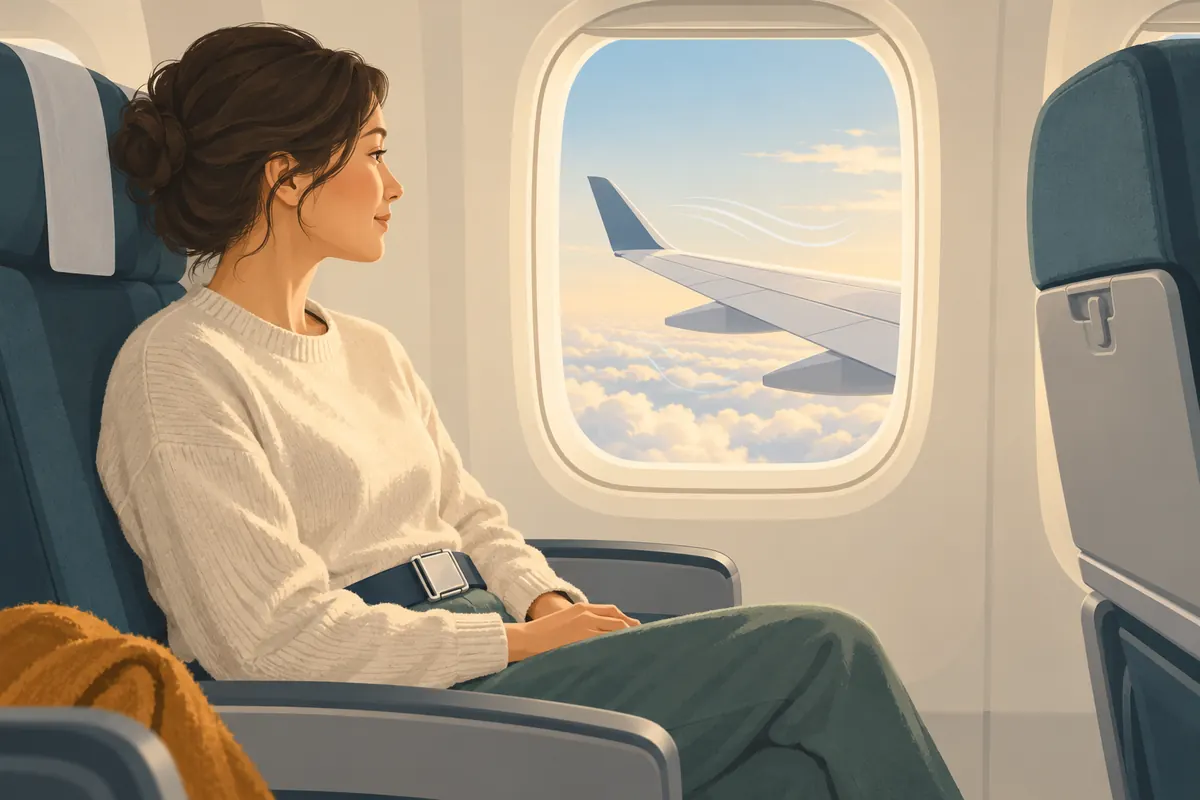
Turbulence can arrive unexpectedly, even when the sky looks clear, so passengers cannot reliably predict it from the view outside. The most practical injury-prevention step is to keep your seat belt fastened while seated and follow crew instructions. A seat near the wings may help some people with motion sickness, but it does not prevent turbulence or protect against turbulence injuries.
Choose a seat for comfort, not as a safety guarantee
Motion sickness can occur when signals from the balance system, vision, and the body’s sense of movement do not match. The CDC Yellow Book explains that this sensory mismatch can happen on aircraft as well as in cars and boats. Looking toward a distant horizon and avoiding prolonged reading or screen use during movement may reduce conflicting visual input.
If you can choose, a seat near the wings is one option to consider for motion sickness. The CDC lists avoiding locations with greater motion, such as the bow of a ship or areas away from an aircraft’s wings, among behavioral countermeasures. The chapter also notes that these measures are only partly effective and may not be available on every trip. A seat near the wing is not a turbulence-safe zone: the FAA’s passenger advice to keep a belt fastened while seated applies wherever you sit.
Before boarding: plan for the belt and for nausea
Once seated, fasten the lap belt so it is secure and comfortable. The FAA advises passengers to keep the belt buckled while seated and identifies flight phases when regulations require it, including whenever the seat-belt sign is illuminated. Unexpected bumps can happen while the sign is off, so leaving the belt fastened while seated avoids relying on a warning as your only cue. Check the airline’s instructions for any child restraint and follow cabin-crew directions.
If you have a history of motion sickness, consider your health conditions and other medicines before choosing a remedy. The CDC Yellow Book notes that motion-sickness medicines generally work best when taken before exposure rather than after symptoms begin. That does not make one drug or dose suitable for everyone. These medicines can cause drowsiness and other adverse effects, and some people have medical contraindications. Ask a clinician or pharmacist if you are considering a medicine for the first time, take other drugs, are pregnant, or are choosing a remedy for a child.
When the aircraft bumps: sit down and follow the crew
If turbulence begins or the seat-belt sign comes on, return to your seat when it is safe to do so and fasten your belt. Avoid reaching for overhead bags or standing in the aisle. Listen to flight attendants and pilots, who can give instructions for the conditions they are managing. Turbulence is air movement associated with several atmospheric conditions; it can occur without visible clouds. A calm-looking sky is not a reason to unbuckle.
A seat belt helps keep a seated passenger from being unexpectedly lifted or thrown from the seat. It cannot prevent all injuries, and it does not replace crew instructions. Adults should not assume they can hold a small child securely through severe movement; use an approved child-restraint system when required or recommended and compatible with the aircraft and seat.
If nausea starts: reduce conflicting sensory input
Pause reading and screen use, keep your head as still as practical, and look toward a distant stable point if one is visible. These behavioral steps may help some travelers, but the CDC describes countermeasures as partial rather than certain. Sitting near the wings may reduce perceived motion for some passengers; if that seat is unavailable, other measures remain worth trying. None changes the need to wear a seat belt while seated.
If you use medicine, account for possible sleepiness or impaired balance after landing as well as during the flight. The CDC notes that effective motion-sickness medicines can have adverse effects and specific medical contraindications. A clinician or pharmacist can help assess pregnancy, health conditions, other medicines, and a child’s age before use. This guide does not select a drug or provide a personal dose.
Keep the two goals separate
The seat belt is an injury-prevention measure for unexpected aircraft movement. Horizon viewing, limiting visual tasks, and seat location are possible ways to reduce motion-sickness symptoms. A comfort measure does not make a seat safe from turbulence, and a fastened belt does not treat nausea. Use each for its actual purpose.
Seek medical advice for severe or recurring symptoms, persistent vomiting, or symptoms that are unusual for you instead of assuming every episode is motion sickness. During the flight, tell the cabin crew if you need help. Before departure, check current airline instructions about boarding and child restraints; once on board, follow the pilots and flight attendants.
An expert perspective: useful measures have limits
CDC Yellow Book author John F. Golding attributes motion sickness to sensory mismatch and lists a horizon view or a seat near the wings as limited countermeasures. They may ease nausea, not prevent injury; FAA belt guidance addresses turbulence risk. Medicines have side effects and contraindications, so seek individual advice.