After a Disaster, Let Communities Set Living-Heritage Recovery Priorities
A practical framework for identifying disrupted practices, setting safety-aware restart conditions, and sharing decisions with the communities that sustain living heritage.
Publication & corrections: infostoa · Editorial standards
Individual author and specialist reviewer information is not provided for this article.
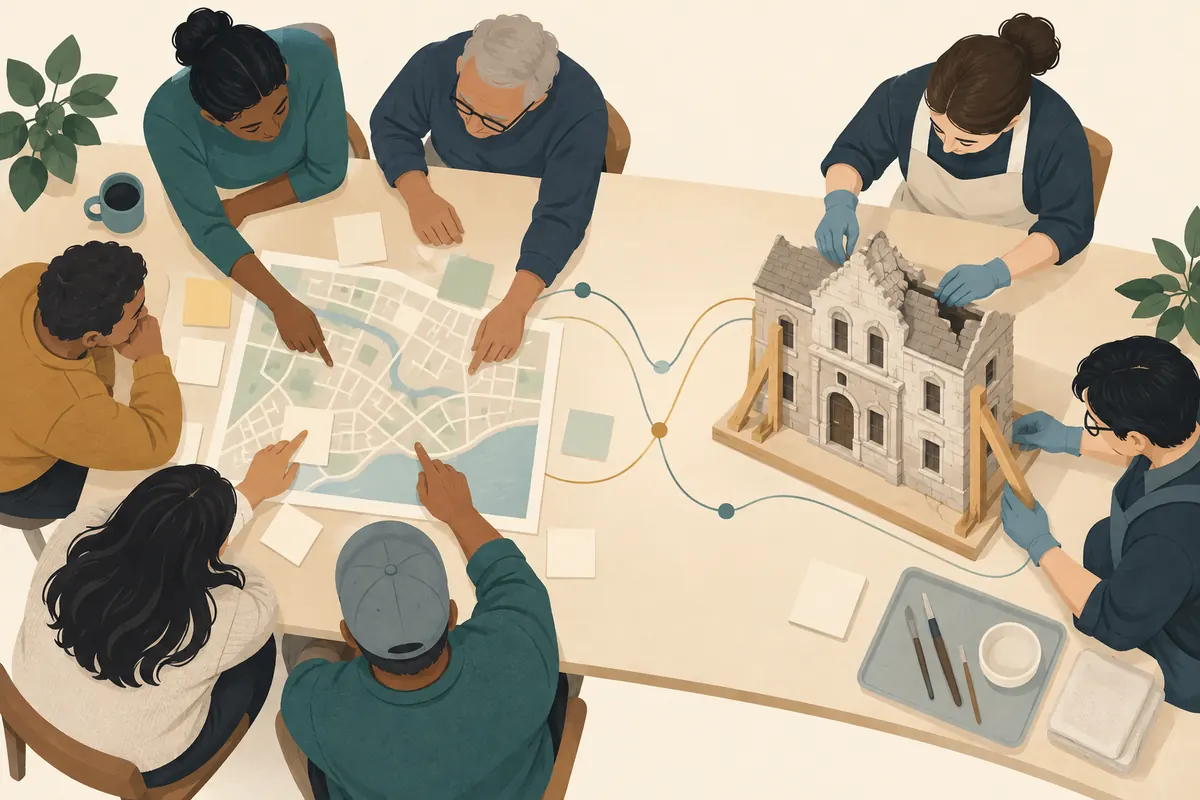
Rebuilding after a disaster is not only a matter of repairing damaged structures or recovering objects. Places can anchor languages, rituals, craft knowledge, gatherings, and transmission networks. Ask what was interrupted, what can safely continue elsewhere, and who decides when activities resume. Communities should make those decisions with technical advice on risks and options.
Look beyond damage to buildings and collections
UNESCO’s Convention defines intangible cultural heritage as practices, expressions, knowledge, and skills that communities recognize as part of their heritage and continually recreate in response to their environment and history. That definition matters during emergencies: a damaged building may be only one part of the loss. A meeting place can disappear while the people, materials, routes, and occasions that sustain a practice are also disrupted. Conversely, some practices may continue in another safe location even when a customary site is inaccessible.
An initial record should identify who practices or teaches an activity, its next seasonal occasion, needed spaces and tools, and whether knowledge holders can be reached. Record only what community members agree may be documented: emergency response does not authorize publication of restricted knowledge or vulnerable locations.
Separate immediate stabilization from decisions to resume
ICCROM’s selected *First Aid to Cultural Heritage in Times of Crisis - Toolkit* page presents practical tools for coordinated cultural rescue and risk reduction involving communities, custodians, responders, and humanitarian actors. It does not instruct teams to resume every activity immediately. Checking life safety and access restrictions before considering a restart is this article’s context-specific planning recommendation; local hazards, authority, and response coordination determine what is possible.
Responders can document immediate hazards, mark closed areas, and agree who reports changes. Community representatives, practitioners, custodians, civil-protection teams, and humanitarian organizations need coordination, but their roles differ. Before stabilizing or moving objects, clarify ownership, cultural meaning, handling authority, and storage. Agree who may access any records. This reduces the risk that a rushed intervention creates a second loss of control.
Let the community define priorities and conditions
Before drawing a recovery sequence, ask who practices, maintains, and transmits the heritage. One spokesperson may not represent everyone. Differences in age, language, location, disability, livelihood, and displacement can affect who is able to attend a meeting or speak safely. Participation may require interpreters, accessible venues, transport, varied consultation formats, or time for internal discussion. Distinguish temporary emergency contacts from organizations with an established representative mandate.
Next, ask what needs to happen first and why. Consider safety and livelihood needs, seasonal timing, whether practitioners can gather, material availability, and whether a space is safe. Activities need not resume at the same pace: a seasonal ceremony and a craft process may have different constraints. State what permits a restart, what requires postponement, and when the decision will be reviewed.
Record information access and changes
A situation log can separate observed damage from estimates and note the source, time, uncertainty, disclosure limits, and next verifier. If an outside organization holds community knowledge, agree with its holders who may access it, how long it is kept, and whether it can be returned or deleted. Consider whether photographs, maps, or locations could expose people or places. These are context-specific planning recommendations, not universal rules established by either source; documentation should not delay urgent rescue.
Practitioner perspective: combine conservation advice with participation
The linked ICCROM page is titled *First Aid to Cultural Heritage in Times of Crisis - Toolkit* and presents coordinated practical tools. UNESCO Article 15 asks States Parties to endeavour to enable broad participation and active involvement; it does not guarantee final decision authority. Specialists can explain hazards and options, while plans clarify locally who participates, how disagreement is handled, and who explains changes. Attendance alone does not establish meaningful participation.
Resume in steps and revisit the plan
Treat the recovery plan as revisable. Teams might test a limited reopening, use a temporary venue, or identify a safe substitute tool before restoring a larger activity. For each step, name a responsible person, resources, safety conditions, stop criterion, and review date.
Visible damage can draw assistance toward buildings and objects. Recording community priorities connects physical stabilization with cultural recovery while keeping them distinct. Conditions and views differ by emergency; this framework is not a site-specific instruction or safety guarantee.