How Cortisol and Aldosterone Deficiency Differ in Addison Disease
An explanation of how primary adrenal damage affects cortisol, aldosterone, and fluid and electrolyte regulation. Symptoms are nonspecific; this is not a diagnostic or treatment guide.
Publication & corrections: infostoa · Editorial standards
Individual author and specialist reviewer information is not provided for this article.
The adrenal cortex produces distinct steroid hormones
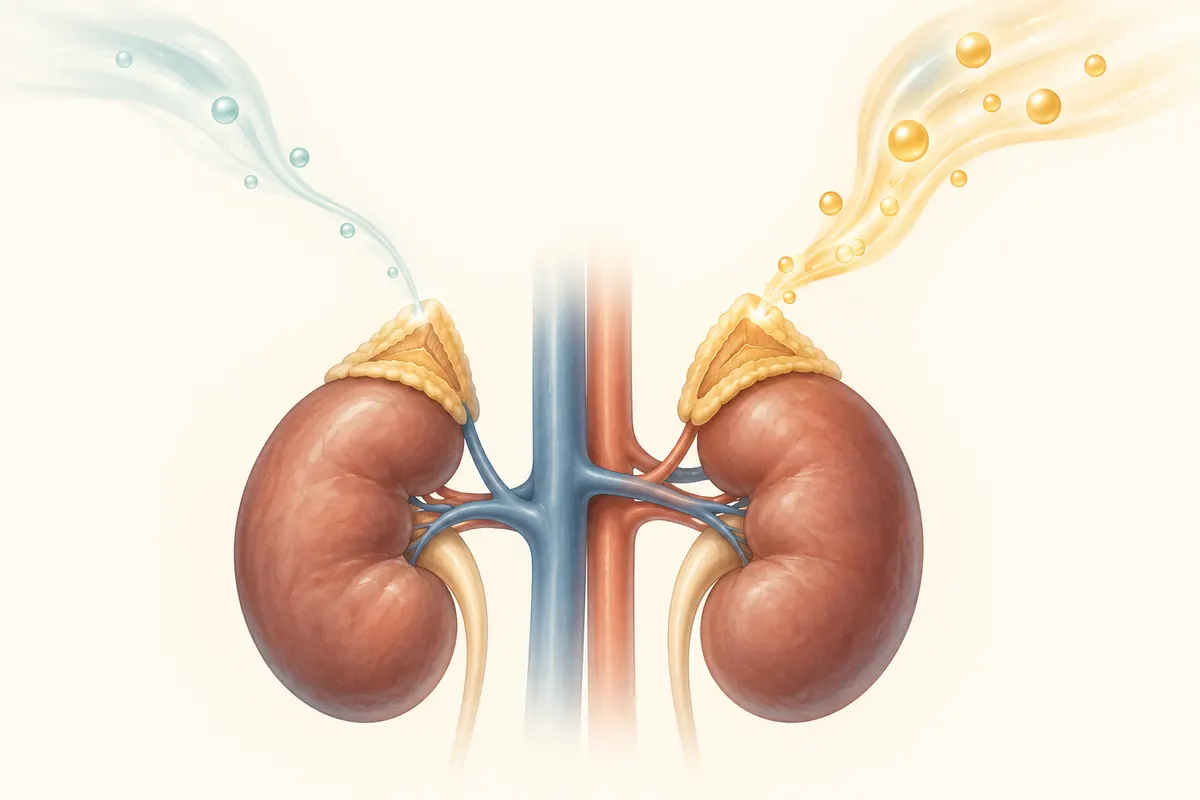
The adrenal glands sit above the kidneys and contain an outer cortex and an inner medulla. Addison disease is a form of primary adrenal insufficiency, in which disease in the adrenal glands themselves impairs hormone production. Different cortical zones produce different steroid hormones. Cortisol participates in energy metabolism, vascular responsiveness, and immune regulation. Aldosterone acts on the kidneys to conserve sodium and excrete potassium, influencing extracellular fluid volume and electrolyte balance. These functions interact, but they are not interchangeable. How much each is affected can vary with the cause and course of disease; the label “Addison disease” does not mean that every person has an identical pattern of hormone loss.
Primary and central insufficiency begin at different points
In primary adrenal insufficiency, a disorder within the adrenal glands reduces hormone production. NIDDK describes autoimmune disease as the usual cause of adrenal damage in Addison disease. Central adrenal insufficiency instead reflects inadequate signaling from the pituitary or hypothalamus. Reduced ACTH stimulation can lower cortisol production even when the adrenal glands are not the original site of disease. Aldosterone is also regulated by the renin–angiotensin system and blood potassium, so it may be relatively preserved in central insufficiency. The 2024 specialist review distinguishes these pathways from suppression of the hypothalamic–pituitary–adrenal axis by external factors. These categories explain why a shared low-cortisol state does not imply the same changes in every adrenal hormone. Residual function and disease stage can also differ among people with primary disease.
Fluid and electrolyte changes follow more than one pathway
Cortisol affects vascular responsiveness and interacts with vasopressin and the kidney’s handling of free water. When cortisol is insufficient, altered water regulation can contribute to low sodium; this mechanism is not limited to primary disease. If aldosterone production is also impaired, the kidneys may lose more sodium and change potassium excretion, adding a different influence on fluid volume and blood pressure. These pathways help explain why primary disease can have a broader salt-balance effect than central disease, while symptoms such as dizziness or low blood pressure may overlap. Sodium and potassium results are affected by many conditions and medicines, however. One abnormal value cannot by itself establish adrenal insufficiency or identify where the problem lies.
Why the same low-cortisol state can have different effects
The 2024 specialist review distinguishes the following pathways. This table describes typical directions, not thresholds for interpreting an individual's results.
| Feature | Primary insufficiency | Central insufficiency or externally induced axis suppression |
|---|---|---|
| Starting point | Disease within the adrenal glands | Reduced pituitary/hypothalamic signaling or axis suppression |
| Cortisol | Can be insufficient | Can be insufficient |
| Aldosterone | May also be affected | Do not assume the same loss as in primary disease |
In primary disease, reduced cortisol feedback can allow ACTH to rise. ACTH stimulation of melanocortin signaling helps explain pigmentation, but its presence or absence cannot confirm or exclude disease. NIDDK describes darkening at scars, skin folds, pressure points and oral mucosa.
A record that helps a clinical discussion
Bring the onset of symptoms, changes in weight or skin color, recent laboratory results with collection times, and the names and duration of steroid medicines currently used or recently stopped. For example, ‘fatigue and low sodium’ alone cannot distinguish primary from central insufficiency; medicine history and further assessment matter. This is a fictional comparison, not a self-diagnosis checklist. Do not abruptly stop a long-used steroid or skip it for testing on your own.
NIDDK advises emergency medical treatment when someone with adrenal insufficiency develops possible adrenal-crisis symptoms such as sudden severe abdominal, back or leg pain, vomiting/diarrhea with marked weakness, confusion or loss of consciousness. Do not wait to finish a record or attend a routine appointment. If an individual emergency plan has already been prescribed, follow it while seeking emergency help. This article does not set laboratory thresholds or medicine doses.